Animal Tooth Identifier
Upload a few photos of an animal tooth and see the clues behind its closest match
Identification form
Upload tooth photos
Clear, well-lit images help the AI identify it more accurately.
Unlock Unlimited Access
- Unlimited Identifications
- Unlimited AI Chat Messages
- Save and Organize Your Collection
How to Use the Tooth Identifier
- 1
Photograph the Tooth as Found
Take a clear photo of the tooth right where it lies. Get any nearby jaw, bone, dirt, or rock layer in the shot too. Don't clean it or pull anything off it yet. Once you have that photo, and if it's safe and legal to pick up, set it on a plain background for closer shots.
- 2
Show the Whole Tooth With a Scale
Set the tooth on a plain background in bright, even light. Take a full photo next to a metric ruler so the crown length and width are easy to read. Shoot any jaw it's stuck to as well. Where a tooth sits and what's next to it often tells you more than its color.
- 3
Capture the Crown, Sides, and Roots
Add a straight-on shot of the chewing surface, both sides, and the root end. Keep the cusps, ridges, sharp edges, wear, cracks, and every root in focus. A few close shots help the tooth identifier way more than one far-away photo.
- 4
Add Location and Find Context
Type in where you really found it. Say if the tooth was loose, in a jaw, sitting on the surface, in dirt, or stuck in rock. Not sure where it came from? Mark it unsure. Where you found it can shrink the list, but it can't prove where a tooth came from by itself.
- 5
Review the Match and Its Limits
Tap “Identify tooth” for an AI-assisted best match. You'll see the clues for and against it, other animals to check, and ways to make sure. Read all the parts together, especially if the tooth is worn or broken. For anything that really matters or stays fuzzy, ask an expert to confirm.
Ready to identify it?
Upload one or more clear photos to get started.
Animal Tooth Identifier for Loose Teeth and Jaw Fragments
Pick up a stray tooth and the questions come fast. Is it even a tooth? Where did it sit in the mouth? Is there enough here to name an animal? This tooth identifier takes them one at a time. Upload a few clear photos, add where you found it and the setting, and get an AI-assisted best match instead of a guess based on one look-alike.
Behind the match, the tool reads whatever the photos show: the crown shape, the cusps and ridges, a sharp or wide surface, roots that are still there, wear, cracks, size, and any jaw. You'll see what backs the match, what argues against it, other animals worth a look, and what to check next. A name is only as good as the features behind it, so we show you those features.
It helps to start wide. Your tooth might be from a mammal, a shark or other fish, a reptile, or something we can't decide yet. It might even be bone, antler, shell, or a stone that just looks like a tooth. Once a mammal looks likely, ask if you're holding an incisor, canine, premolar, or molar. Comparing exact animals only helps after that.
Think of this as a way to learn, not a vet, forensic, archaeology, or legal ruling. When the clues only reach a broad group, saying so honestly beats a confident name the tooth can't back up.
Read the Crown, Cusps, Roots, and Tooth Position
For good animal tooth identification, read the working surface before the overall shape. The crown is the part above the gum that did the work: cutting, holding, crushing, grinding, or slicing. The bumps on it are cusps. The ridges, dips, flat spots, and sharp edges show how it met the teeth across from it. Shoot these straight on. A tilted photo can make a wide molar look narrow or hide a small cusp.
The type of tooth is your first hint. Incisors sit up front and usually nip or cut. Canines come next and poke, grip, or tear. Premolars and molars are cheek teeth, made for slicing, crushing, or grinding. Treat these as common jobs across many animals, not a diet key. Read them along with size, crown shape, and where the tooth sat in the jaw.
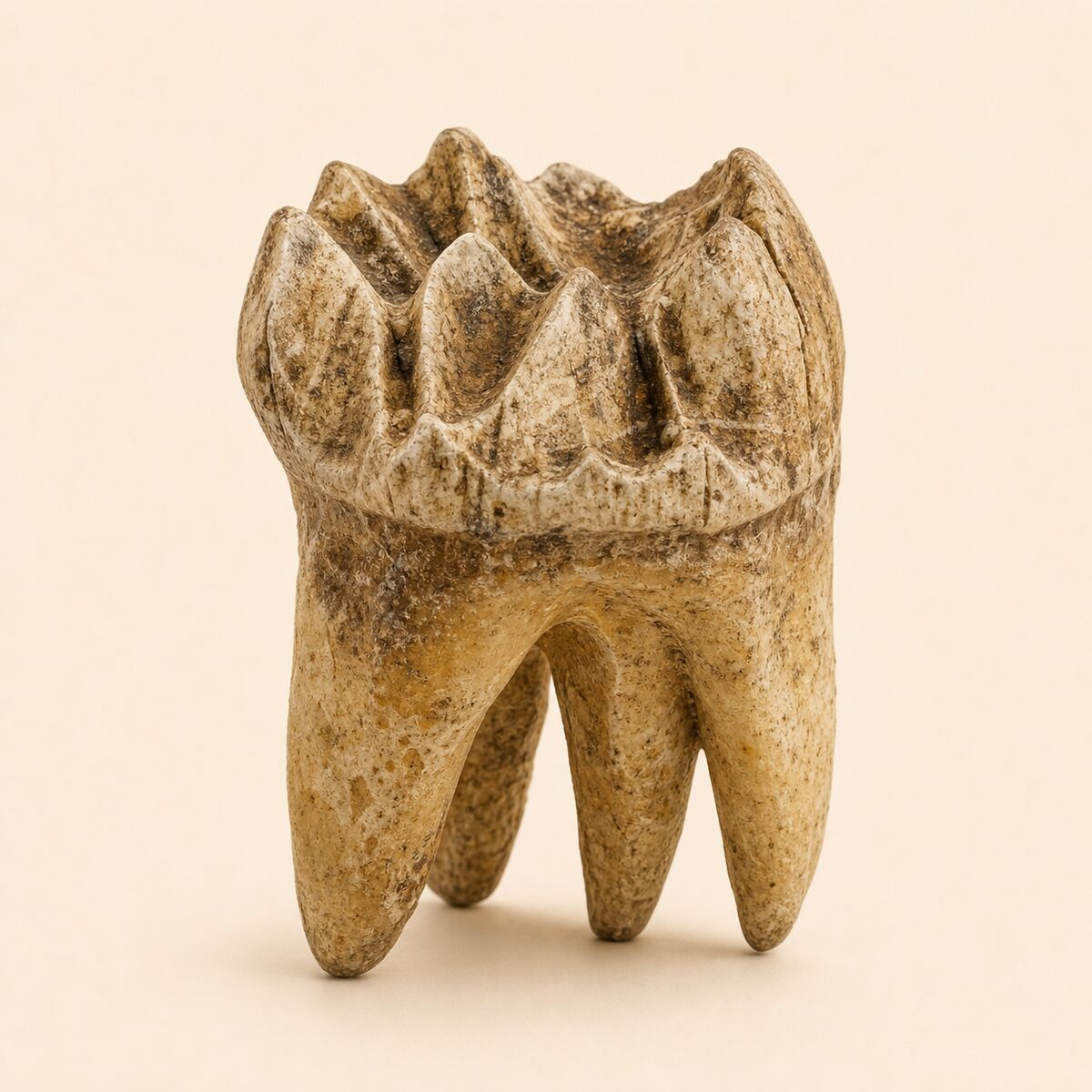
Roots help your case but rarely close it. Show how many are left, whether they split or curve, and whether the tips are whole, worn, shrunk back, or snapped. Heavy wear grinds off the very cusps you'd use to tell animals apart. A baby tooth or a half-grown-in tooth won't match a neat adult example.
When a jaw comes with the tooth, photograph the whole row and both sides. Note upper or lower if you know it. Count each type with care, and don't hide the empty sockets. Counting the teeth only helps once you've sorted out side, jaw, missing teeth, age, and normal differences between animals. Even then, one lone first or second molar can hide its exact spot, even when the group is clear.
Compare Common Animal Teeth Without Overstating the Match
Good comparisons start with features, not with the animal you're hoping for. Pig and boar molars often have several fairly flat, crushing cusps, but one loose molar may not tell a farm pig from a wild boar. Sheep cheek teeth look thin next to the bigger teeth of cattle, though size only means something with a ruler in the shot. Sheep versus deer stays a hard call even in a sharp photo.
Among common meat-eaters, dog cheek teeth look chunkier and less needle-sharp than a cat's. That's a helpful push toward a short list, not a rule you can pin an ID on. Rodent finds often show up another way: one big chisel-like front tooth, a bunch of tiny teeth, or gnaw marks nearby.
How an animal ate helps you sort the options. Sharp canines and blade-like cheek teeth go with holding and slicing. Taller or ridged molars go with grinding. Low, wide, bumpy molars go with crushing a bit of everything. Just don't turn these into hard rules every meat-eater, plant-eater, or mixed feeder must follow. Animals that aren't related grow similar surfaces for similar jobs, and one animal carries several tooth types doing different work.
So the tooth identifier weighs the whole set at once: crown shape and size, cusp layout, roots, wear, scale, jaw, and location. If one feature says pig while another says no, that goes in the result, not under the rug. An honest short list — pig or boar, sheep or deer, dog or another dog-like animal — holds up better than one species the clues could never separate.
Use Find Location and Context to Test the Identification
Where a tooth turned up can change which matches deserve a look, but location supports an ID — it doesn't prove one. Enter the town, region, and country when you know them. Name the spot: backyard, trail, beach, stream gravel, soil, cave, dig site, or rock layer. If it came off an old label or from someone else, keep it unsure instead of calling it a firm origin.
What was going on at the find tells you even more. Was the tooth loose, or set in an upper or lower jaw? Were other teeth or bones with it? Was it on the surface, buried, or locked in packed dirt? Photograph how it all sat before you move anything. A jaw with its row still in place hands you position and count for free. A loose tooth takes both away.
Don't call a tooth a fossil just because it's black, brown, shiny like a mineral, or old. Color usually comes from staining and says nothing sure about age. A known rock layer, the dirt and rock around it, a record of who owned it, and a look from someone who knows the local rocks count for far more. Modern, archaeology, and fossil finds can share a crown shape and still need different experts.
Location won't settle farm animal versus wild, either. Animals roam, teeth get carried off, fill dirt gets trucked in, and collections change hands. Use where it came from to rule out what makes no sense, then ask whether the anatomy agrees. The best tooth identification keeps where you found it apart from what you guess, and names any missing link.
Know the Limits and When to Ask an Expert
Photo ID has limits you can plan for. A worn crown may show up with no roots. A broken tooth may have just one good edge. A lone molar may not tell you where it sat in the mouth. Baby teeth, missing or extra teeth, odd wear, and normal differences between animals can all clash with the pattern you expected.
So treat the result as a best match you can test, not a final word. Read the clues that back it, then the clues against it and the other options. Follow tips for a better angle, a measurement, or a comparison. But don't cut, polish, bleach, glue, or run any test that could damage something rare or important. Depending on the find, your next call might be a natural-history museum, a college zoology or archaeology collection, a vet, a wildlife agency, or a fossil expert.
Handle fresh remains, sharp roots, and anything dirty with care. Keep it away from where you make food, don't touch tissue with bare hands, and wash up after. Rules on collecting, keeping, moving, and selling change with the place, the landowner, the species, and whether the find is wildlife, fossil, archaeology, or culturally important. An ID, no matter how sure, clears none of those steps.
And if a tooth could really be human, stop. Don't clean, keep, or move it, and don't dig up the spot more. Call your local authorities. The animal tooth identifier can't tell you if a tooth is human or not. Use the same care with any shaky match that could feed research, a legal report, or the handling of protected material. Leave everything as it is and get an expert to confirm it.
Put what you’ve learned to use
Upload your photos and compare the suggested match with the features you observed.
Frequently Asked Questions
What is a tooth identifier?
It's a photo tool that helps you figure out which animal a tooth or jaw piece likely came from. It looks at what it can see — crown shape, cusps, roots, wear, size, and any jaw — and weighs that against the location and notes you add. You get an AI-assisted best match, not a confirmed species.
What photos are best for animal tooth identification?
Take a sharp, evenly lit photo of the whole tooth. Then add close shots of the chewing surface, both sides, and the root end. Put a metric ruler in at least one full photo. Get any jaw, nearby teeth, or empty sockets too. Skip filters, glare, and angles that hide the shape of the crown.
Can one isolated tooth identify an exact animal species?
Sometimes, but often not. Animals that are closely related can have teeth that look alike. And one loose tooth is hard to place — upper or lower, left or right, first or second molar. Wear, cracks, age, and normal differences between animals take away even more clues. A jaw and a tooth you know for sure to compare it to help a lot.
How can I tell whether my find is really a tooth?
Look for a real crown and root that go together, not just something with a pointy, tooth-like shape. Once a root snaps or a crown wears down, it gets hard to tell a tooth from bits of bone, antler, shell, or stone in a photo. If you still can't tell, leave it alone and let a museum, a college collection, or another expert look at it in person.
Is it an incisor, canine, premolar, or molar?
Incisors are the front teeth, used to cut or nibble. Canines poke, hold, or tear. Premolars and molars are the cheek teeth that crush, grind, or slice. Lots of animals have teeth that do these same jobs, so the type is just a starting group. The crown shape plus where the tooth sits in the jaw tells you much more together.
Can tooth shape reveal whether an animal ate plants or meat?
It gives a hint about how an animal ate, not an exact diet. Flat or ridged grinding surfaces lean toward plants. Sharp canines and blade-like cheek teeth lean toward holding and slicing meat. Low, wide, bumpy molars show up in animals that eat a bit of everything. Since the same job leads to the same tooth shape in animals that aren't related, diet alone can't tell you what you're holding.
Can the tooth identifier distinguish pig from wild boar or sheep from deer?
Don't count on looks alone. Pig-type molars often have wide, fairly flat crowns with several cusps, but one loose tooth may not tell a farm pig from a wild boar. Sheep and deer cheek teeth are close too. When the photos, measurements, position, and history can't settle it, the result should keep both animals on the list.
Can it identify shark teeth and other non-mammal teeth?
When the clues point away from a mammal, the tool can look at a wider group — sharks, other fish, reptiles. Teeth that aren't from mammals rely on their own reference sets, though, and a broken pointy piece may stay a mystery. Give it the same full shots, a ruler, the edges, the base or root, the location, and the setting.
Does a dark tooth mean it is fossilized?
No. A dark, stained, or worn look doesn't make a tooth a fossil. Write down whether it came from a known rock layer, loose dirt, stream gravel, soil, or an old collection. Show any rock or dirt still stuck to it. Where it came from in the ground, plus an expert's look, count for way more than color.
Can roots, wear, or a broken crown still help?
Yes. The number and shape of the roots, any cusps or ridges left, the wear, how thick the crown is, and even a fresh crack all add clues. They rarely name the species by themselves, though. If the roots are gone, say whether they were never there, worn off, or snapped. Photograph the break instead of gluing it back.
Should I clean an animal tooth before uploading photos?
Take a photo of it just as you found it first. Don't scrape, bleach, glue, or scrub anything that might matter. That wipes away surface detail and clues you can't get back. If it's clearly a loose animal tooth and legal to pick up, a dry brush can bring out detail. Wear gloves near fresh tissue and wash your hands after.
What should I do if the tooth might be human or legally protected?
Don't use this tool to decide if a tooth is human or not. If it might be, stop cleaning, moving, or keeping it and call your local authorities. Wildlife, fossil, archaeological, and cultural finds can have their own rules by place and by species. Check the local rules and get the landowner's OK before you collect, move, sell, or change a find.
Ready to give it a try?
Upload your photos for an AI-assisted best match.