Crystal Identifier
Free Crystal Identifier - Reveal the Magic
Identification form
Upload crystal photos
Clear, well-lit images help the AI identify it more accurately.
Unlock Unlimited Access
- Unlimited Identifications
- Unlimited AI Chat Messages
- Save and Organize Your Collection
How to use the Crystal Identifier
- 1
Prepare Your Crystal
Clean your crystal gently to remove fingerprints or dust. Place it on a plain white or neutral background to ensure the colors stand out clearly.
- 2
Optimize Lighting
Lighting is critical for crystals. Use soft, natural daylight. If the crystal is transparent, try to capture how light passes through it to show clarity and internal inclusions.
- 3
Capture Key Angles
Take multiple photos. Capture the natural termination points (tips) if present, or the fracture patterns. For tumbled stones, try to minimize glare.
- 4
Note Visual Features
Input details about the specimen. Is it raw or polished? Does it have a vitreous (glass-like) or waxy luster? What is the dominant color?
- 5
Identify & Learn
Click "Identify Crystal" to analyze. Our AI compares your photo against a vast database of minerals and gemstones to give you the name, metaphysical properties, and geological data.
Ready to identify it?
Upload one or more clear photos to get started.
Discover the World of Crystals with Our Crystal Identifier
Crystals have captivated humanity for thousands of years. From the protective amulets of ancient civilizations to the modern resurgence of mineral collecting for healing and decoration, these geometric marvels are more than just pretty stones. They are precise arrangements of atoms, formed over eons under immense pressure and heat. However, with thousands of mineral varieties in existence—ranging from the common Quartz to the rare Tanzanite—knowing exactly what you hold in your hand can be a challenge. That is where a reliable crystal identifier becomes essential.
Whether you are a jewelry enthusiast trying to identify a mystery gem, a spiritual seeker looking to understand the energy of a stone, or a geology student studying crystal habits, our tool is designed for you. Visual identification of crystals requires analyzing color, transparency, crystal habit (shape), and luster. A piece of green glass can look remarkably like an Emerald or Peridot to the untrained eye. Our advanced AI helps bridge that gap, offering instant insights into the identity of your specimen. Beyond just a name, our crystal identifier opens the door to understanding the stone's hardness, origin, and the lore that surrounds it, turning a simple curiosity into a journey of discovery.
Real vs. Fake: The Challenge of Crystal Identification
One of the biggest reasons people turn to a crystal identifier is to verify authenticity. The mineral market is flooded with synthetic imitations, dyed stones, and simple glass sold as high-value gems. While a photo analysis is the first step, understanding the physical tell-tales of genuine crystals is vital.
Bubbles vs. Inclusions: Natural crystals rarely have perfectly round air bubbles inside them; that is a hallmark of glass. Instead, real gemstones often contain "inclusions"—tiny cracks, other minerals, or liquid-filled cavities that look like fingerprints of nature. For example, a real Moonstone might have internal layering (centipedes), while opalite (a man-made glass) will look perfectly milky and uniform.
Temperature and Feel: Real crystals, particularly Quartz and semi-precious stones, generally feel cool to the touch when you first pick them up and take time to warm in your hand. Plastic or resin imitations will feel room temperature immediately. Additionally, the Mohs Hardness test is a definitive way to separate gems. A real diamond or sapphire is incredibly hard, whereas glass is relatively soft and can be scratched easily. Our tool helps highlight these specific characteristics for each result, guiding you on what to look for to confirm if your prize is the real deal.
Understanding Common Crystal Families
To better identify crystals, it helps to categorize them into their mineral families. Most of the stones you will encounter belong to a few dominant groups. Recognizing the family traits can drastically narrow down your search results.
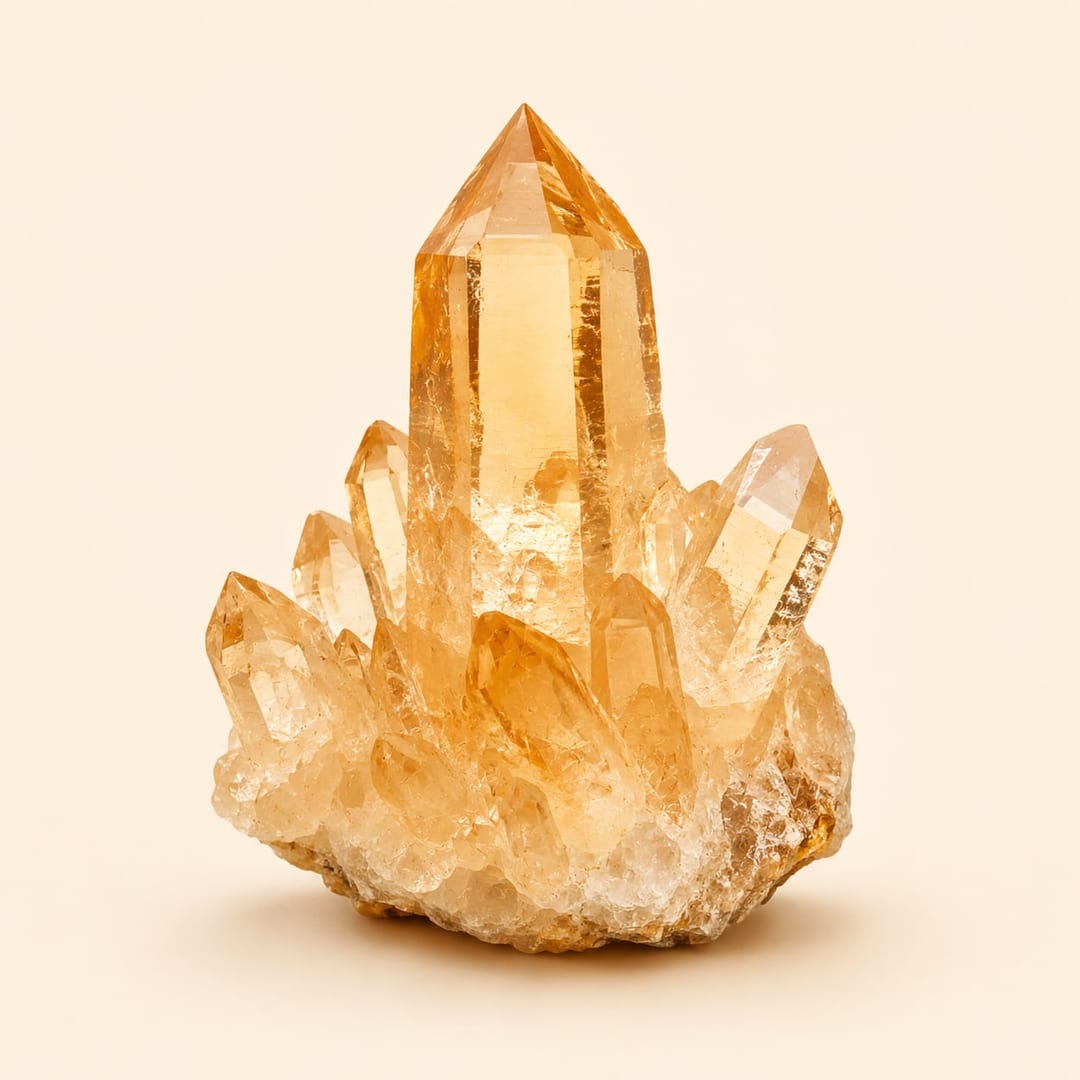
The Quartz Family: This is the most abundant crystal family on Earth. It includes Clear Quartz, Amethyst (purple), Citrine (yellow), Rose Quartz (pink), and Smoky Quartz (brown/black). They all share a similar hexagonal crystal structure and a hardness of 7. If your stone is glassy, hard, and comes in these colors, it is likely a Quartz variety.
The Beryl and Corundum Families: These are the royalty of gemstones. Beryl includes Emerald (green) and Aquamarine (blue). Corundum includes Ruby (red) and Sapphire (all other colors). These are distinguished by their extreme hardness (Sapphires are a 9 on the Mohs scale) and distinct crystal shapes—often forming hexagonal prisms or barrel shapes.
Feldspars and Calcites: Feldspars, like Labradorite and Moonstone, are known for their "flash" or iridescence (labradorescence/adularescence). Calcite, on the other hand, is very common but much softer. It often has a waxy feel and comes in almost every color, from orange to blue. Knowing these distinct visual phenomena helps our crystal identifier pinpoint exactly what you have found.
Tips for Curating Your Crystal Collection
Building a crystal collection is a personal and artistic pursuit. As you use our crystal identifier to catalog your finds, keep these tips in mind to maintain the value and beauty of your specimens.
Storage and Sunlight: Be careful where you display your stones. Some crystals are photosensitive. Amethyst, Rose Quartz, and Fluorite can fade significantly if left in direct sunlight for long periods. It is best to keep these colorful gems in shaded areas or display cases away from windows.
Cleaning Your Crystals: Not all crystals love water. While Quartz is safe to rinse, softer or porous stones like Selenite, Malachite, and Pyrite can be damaged, dissolved, or rusted by water. Always check the mineral properties provided by our identification tool before soaking any stone. For delicate items, a soft brush or compressed air is the safest cleaning method.
Labeling: As your collection grows, it is easy to forget whether that tumble was a Sodalite or a Lapis Lazuli. We recommend keeping a digital log or physical labels with the name and location of origin. Our tool allows you to save your identified history, acting as a digital catalog for your growing mineral museum.
Why Use Our Online Crystal Identifier?
Identifying crystals by eye alone requires years of study and access to reference books. Our online crystal identifier democratizes this knowledge, putting the expertise of a gemologist into your pocket for free. We use cutting-edge computer vision trained on high-quality mineralogical datasets to distinguish between subtle shade variations and crystal habits.
This tool is invaluable for verifying online purchases, cataloging inheritance jewelry, or simply satisfying curiosity about a stone found on a beach. Unlike paid apps, our web-based solution is instant and requires no downloads. We also bridge the gap between science and spirituality; for every identified stone, we provide not just the geological hardness and formula, but often the common healing associations and chakras, catering to both rockhounds and holistic enthusiasts alike.
Put what you’ve learned to use
Upload your photos and compare the suggested match with the features you observed.
Frequently Asked Questions
Can this tool identify polished or tumbled stones?
Yes, our crystal identifier is trained on both raw (natural) formations and polished (tumbled) stones. However, distinctive features like crystal points are missing in tumbles, so color and luster become the primary identifiers.
Is the crystal identifier free to use?
Yes. You can identify crystals for free right in your browser, with a generous daily allowance of identifications and no sign-up or app download required. For unlimited identifications, unlimited AI chat, and the ability to save and organize your collection, you can upgrade to IdentifyRock Unlimited.
Can it tell me if my crystal is real or glass?
The AI can identify the visual probability of a stone. While it can distinguish between obvious fakes (like dyed agate vs. real) and genuine stones, a definitive authentication for high-value gems often requires physical testing (refractive index, specific gravity) by a professional.
Does the tool provide metaphysical properties?
Yes. Along with the scientific name and geological data, our results often include the common metaphysical associations, such as the stone's potential healing properties, chakra alignment, and zodiac signs.
Why does my blue stone have multiple potential matches?
Many blue stones look similar, such as Sodalite, Lapis Lazuli, and Dumortierite. The tool may suggest a few options. You can narrow it down by checking for specific traits we list, such as the presence of gold flecks (Pyrite) common in Lapis Lazuli.
How do I take the best photo of a gemstone?
Avoid using a flash, as it causes glare. Use natural, indirect window light. If the stone is transparent, try to light it from the side or back to show its internal color. Ensure the photo is in sharp focus.
Ready to give it a try?
Upload your photos for an AI-assisted best match.