Fossil Identifier
Decode the History of Life on Earth with AI-Powered Paleontology
Identification form
Upload fossil photos
Clear, well-lit images help the AI identify it more accurately.
Unlock Unlimited Access
- Unlimited Identifications
- Unlimited AI Chat Messages
- Save and Organize Your Collection
How to Use the FOSSIL IDENTIFIER
- 1
Snap a Clear Photo
Click "Upload Images" to select your specimen. For accurate paleontological identification, place the fossil on a neutral, contrasting background. Ensure even lighting to highlight surface textures like ridges, sutures, or bone porosity.
- 2
Capture Diagnostic Details
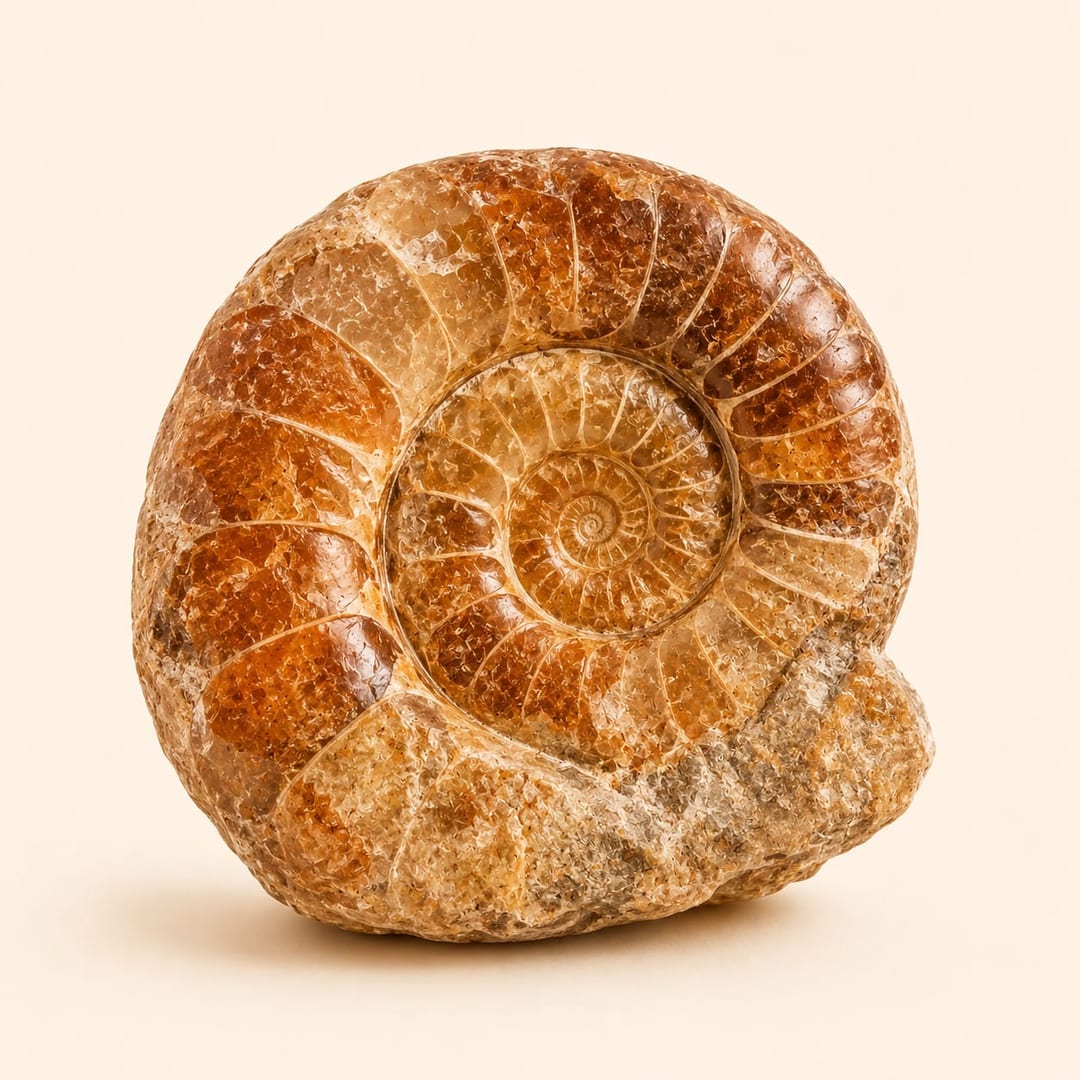
Fossils are often identified by minute morphological features. Upload close-ups of specific areas, such as the hinge line of a bivalve, the pattern of an ammonite's shell, or the grain of petrified wood. If the fossil is embedded in a matrix, try to capture the boundary between the two.
- 3
Pinpoint the Stratigraphy
Geological context is critical. Tell us where the specimen was found. A fossil found in a Devonian limestone bed differs vastly from one in an Eocene clay deposit, even if they look similar.
- 4
Add Taphonomic Observations
Provide details that a camera might miss. Is the specimen heavy (permineralized)? Is it a flat imprint (carbonization) or a 3D shape (cast/mold)? Note if the surrounding rock is sandstone, shale, or limestone.
- 5
Get Instant Taxonomy
Click "Identify Fossil" to begin. Our AI compares your find against a vast database of index fossils and biological records to determine the Phylum, Class, and likely Genus of your discovery.
Ready to identify it?
Upload one or more clear photos to get started.
From Biology to Lithology: Understanding Fossilization
Fossilization is a rare occurrence in the geological record, requiring a specific set of taphonomic conditions to turn a living organism into stone. Taphonomy, the study of decaying organisms over time, reveals that for a fossil to form, the organism must typically be buried rapidly by sediment. This protects it from scavengers and immediate decomposition. Over millions of years, the organic material is subjected to immense pressure and lithification. The most common form of fossilization identified by our tool is permineralization. This occurs when groundwater rich in minerals like silica or calcite permeates the porous tissue of bone, wood, or shell. The minerals precipitate out of the water, filling the empty spaces and solidifying the structure while retaining the original cellular shape. This process turns organic matter into rock, preserving delicate details that allow for precise identification. Understanding these processes is crucial for identification. A "fossil" is not merely an old bone; it is a geological intersection of biology and time. Whether you have found a pyritized ammonite or a carbonized leaf impression, knowing the mode of preservation helps our AI narrow down the potential time period and environment in which the organism lived.
Modes of Preservation: Molds, Casts, and Trace Fossils
Not all fossils are the actual remains of an animal. When using the fossil identifier, it is helpful to distinguish between body fossils and other geological impressions. Body fossils represent the physical remains of the organism, such as shells, teeth, or bones. However, many users often find molds and casts. A mold is formed when an organism (like a shell) dissolves completely after being buried in sediment, leaving a hollow cavity that retains the exact shape of the surface. If this cavity is later filled with sediment or minerals, it creates a cast—a natural replica of the original organism. Another fascinating category is trace fossils (ichnofossils). These are not parts of the animal itself but records of its behavior. This category includes footprints, burrows, coprolites (fossilized dung), and feeding marks. Identifying trace fossils requires looking at the pattern and the sedimentary context rather than biological anatomy. For example, a tubular structure in sandstone might be a shrimp burrow (Ophiomorpha) rather than a plant stem. Our AI is trained to recognize these behavioral signatures, differentiating a mere rock scratch from a prehistoric trackway.
Common Finds: Identifying Marine Invertebrates
The vast majority of fossils found by amateurs are marine invertebrates, as oceans have covered much of the Earth's surface for most of geological time. The fossil identifier frequently encounters specimens from the Paleozoic and Mesozoic eras. Brachiopods are among the most common; often confused with clams, these shelled animals have a unique symmetry line running down the center of the shell, whereas clams are symmetrical between the two valves. Recognizing this symmetry is a key diagnostic step. Crinoids, or "sea lilies," are another frequent find, particularly their stems. These appear as small, stacked discs (ossicles) often resembling screws or washers embedded in limestone. Ammonites and their straight-shelled cousins, the orthocones, are index fossils for the Mesozoic and Paleozoic respectively. Their complex suture patterns (the lines where the internal walls meet the outer shell) are like fingerprints for species identification. When photographing these, ensure the suture lines are visible, as they are the primary method for distinguishing between different genera of cephalopods.
Pseudofossils: Nature’s Decoys
A significant challenge in fossil identification is the pseudofossil—a geological formation that mimics a biological structure. One of the most common errors is misidentifying manganese dendrites as fossilized ferns or moss. These intricate, branching crystal growths form along rock fractures and look strikingly like plant matter, but they are purely mineral in origin. The key difference lies in the lack of organic carbon and the way the crystals follow the rock's fissure patterns perfectly. Concretions and nodules are other common decoys. These hard, compact masses of sedimentary rock can form spherical or ovoid shapes that resemble dinosaur eggs, turtle shells, or even skulls. While concretions often form around a fossil nucleus (like a leaf or a shell), the concretion itself is non-biological. Our fossil identifier tool analyzes surface texture and structural continuity to distinguish between the chaotic, inorganic growth of a concretion and the ordered, functional morphology of biological remains.
Stratigraphy: The Context of the Find
In paleontology, context is everything. The rock layer, or stratum, in which a fossil is found serves as a timestamp. This concept, known as stratigraphy, helps correlate findings across different regions. For example, a trilobite found in the black shales of the Cambrian period is distinct from those found in the limestones of the Devonian. The surrounding matrix—the rock holding the fossil—provides clues about the ancient environment, whether it was a deep ocean floor (shale), a shallow reef (limestone), or a river delta (sandstone). When you input the location into the fossil identifier, you are effectively referencing a geological map. Certain formations are famous for specific types of preservation. The Lagerstätten (storage places) are sites of exceptional preservation where soft tissues are sometimes fossilized. Knowing if your find comes from a known fossil-bearing formation, like the Green River Formation or the Burgess Shale, allows for a much higher probability of accurate species identification.
Responsible Collecting and Ethics
While identifying fossils is an exciting journey into the past, it must be done responsibly. Laws regarding fossil collection vary significantly by country and land ownership. generally, collecting invertebrate fossils (like shells and corals) on public land is often permitted for personal use, but vertebrate fossils (bones, teeth, dinosaur remains) are strictly protected and usually require a permit or are reserved for scientific institutions. Scientific value is paramount. If you find a vertebrate fossil or a specimen of exceptional quality, it is best to photograph it and record the GPS coordinates without removing it from the matrix. Disturbing the site can destroy vital stratigraphic data that paleontologists need to study the specimen's age and environment. Our fossil identifier is designed to help you appreciate and learn from these discoveries in situ, promoting a "leave no trace" approach for scientifically significant finds.
Put what you’ve learned to use
Upload your photos and compare the suggested match with the features you observed.
Frequently Asked Questions
Is this fossil identifier tool really free?
Yes, the Fossil Identifier is free to use, with a generous daily allowance of identifications and no sign-up or credit card required. We believe education about Earth's history should be accessible to everyone, from curious hikers to amateur paleontologists. To identify beyond the daily allowance, with unlimited identifications, unlimited AI chat, and saved collections, you can upgrade to IdentifyRock Unlimited.
Do I need to download an app to identify my fossils?
No, you do not need to download or install any software. This is a fully web-based application (online web app) that works directly in your browser on both mobile devices and desktop computers. This ensures you can identify specimens in the field without using up storage space on your phone.
Can this tool identify dinosaur bones?
While the AI is trained on vertebrate morphology and can identify common vertebrate remains like shark teeth or mammal vertebrae, identifying specific dinosaur species often requires analyzing microscopic bone structure and precise anatomical measurements. The tool provides a high-level classification (e.g., 'Theropod tooth' or 'Vertebrate bone fragment') but generally excels most at invertebrate identification (ammonites, trilobites, brachiopods) which are more common.
What if the fossil is stuck inside a rock?
If your fossil is partially embedded in the matrix (the surrounding rock), try to photograph the exposed parts clearly. Do not attempt to hammer or remove the fossil if you are inexperienced, as this often shatters the specimen. The AI can often recognize a fossil based on partial exposure, such as the cross-section of a shell or the visible ridges of a coral.
Why did the result say my find is a 'Pseudofossils'?
Nature often creates patterns that look biological but are actually geological. Common examples include manganese dendrites (which look like ferns) or cone-in-cone structures. If the tool identifies your find as a pseudofossil, it means the features detected align with inorganic crystal growth or sedimentary structures rather than biological anatomy.
Ready to give it a try?
Upload your photos for an AI-assisted best match.