Silver Hallmark Identifier
Upload photos of the stamped marks and get AI-assisted clues to your silver's standard, origin, maker, and age
Identification form
Upload hallmark photos
Clear, well-lit images help the AI identify it more accurately.
Unlock Unlimited Access
- Unlimited Identifications
- Unlimited AI Chat Messages
- Save and Organize Your Collection
How to Use the Silver Hallmark Identifier
- 1
Photograph the Whole Piece First
Start with a photo of the complete item — spoon, ring, teapot, goblet, or tray — on a plain, matte background. The object's shape, construction, and style give the marks context, and where the stamps sit on a piece is itself an identification clue.
- 2
Take a Straight-On Close-Up of the Marks
Fill the frame with the entire row of stamps, keep the camera square to the surface, and use soft, diffused daylight so the reflective metal does not glare. You can add up to six photos, so include a second close-up lit from a low angle if any punch is worn or shallow.
- 3
Add Where the Piece Came From
Enter where the item was found, bought, or inherited in the optional location field. Provenance narrows the likely marking system — a teaspoon from an English estate sale points toward different hallmark tables than a bracelet bought in Mexico City or a tray from a Berlin flea market.
- 4
Describe Every Detail You Can Make Out
In the notes, list any numbers, words, initials, or symbols you can read, the order of the stamps, and the outline shape around each one. Add physical observations too, such as whether a magnet sticks, seams are visible, or a different color shows through worn high spots.
- 5
Review Your Hallmark Identification Result
Click "Identify silver hallmark" to start the analysis. The result proposes the closest match for the mark group, explains which details support it, notes evidence that argues against it, and lists alternative readings so you know exactly what to check next.
Ready to identify it?
Upload one or more clear photos to get started.
What a Silver Hallmark Can — and Cannot — Tell You
A silver hallmark identifier turns the tiny stamps on a spoon, ring, tray, or teapot into a structured reading of what the piece claims to be. A true hallmark is an official group of marks struck under a national assay system: the metal was tested, and the marks record the standard it met, the office that tested it, and the party responsible for submitting it. That is why a genuine hallmark group is such strong evidence — each mark corroborates the others.
Not every stamp is a hallmark, though. Maker's and sponsor's marks identify a registered workshop, retailer, or importer. Trademarks and pattern numbers identify a brand or a design. Plate marks such as EPNS describe a manufacturing process, not a precious-metal standard. And pseudo-hallmarks imitate the look of an official group without certifying anything. Sorting the stamps into these roles is the first job of hallmark identification, and it is where a photo-based tool saves the most time compared with paging through a silver hallmark identification chart or a marks encyclopedia by hand.
A photo has limits worth stating plainly. No image can chemically assay metal, see beneath a plated surface, or confirm that a mark was struck legitimately. The identifier therefore treats every stamp as evidence rather than proof: it proposes the most likely reading of the whole group, explains the supporting clues, flags details that argue against the match, and suggests what to photograph or check next. Use it to focus your research, not to close it.
How to Read a British Hallmark
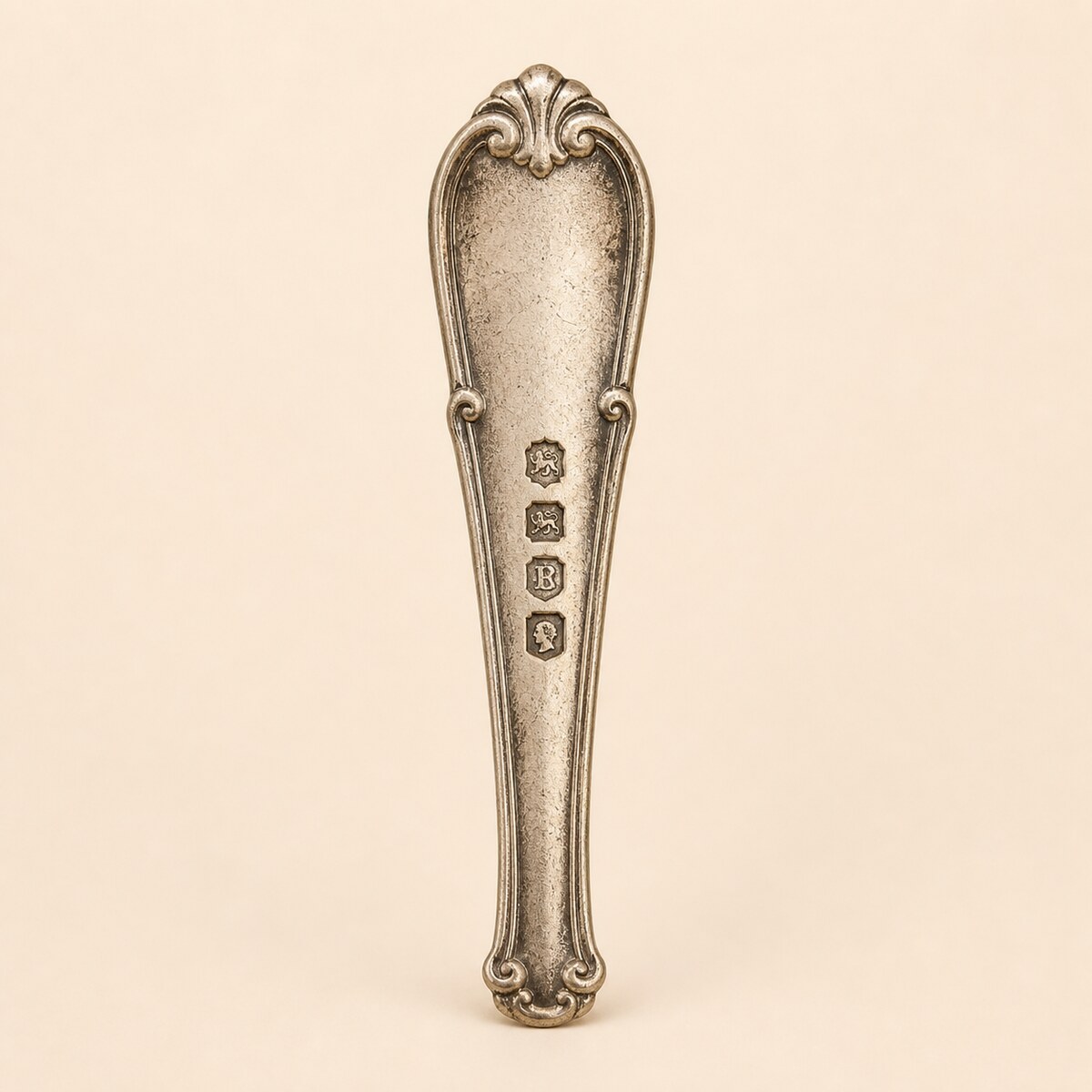
British hallmarks are the system most visitors ask about, and they reward reading in a fixed order. Start with the standard mark: the lion passant — a walking lion — has long marked sterling in England, while a seated figure of Britannia marks the higher Britannia standard. Next find the assay office mark: a leopard's head for London, an anchor for Birmingham, a rose (earlier a crown) for Sheffield, a castle for Edinburgh, and a harp for Dublin under the Irish system. Then use the date letter, remembering that each office ran its own alphabet cycles and that the letter's font, case, and shield outline are as important as the letter itself. Finally compare the sponsor's mark, the registered initials of the party that submitted the piece for assay — a maker, retailer, or importer. Older pieces may add a monarch's-head duty mark, and imported wares carry marks of their own.
Two cautions keep this useful. First, the date letter records the hallmarking cycle, not necessarily the year the piece was crafted, and historical cycles could span parts of two calendar years. Second, the British system is not universal. French, German, Dutch, Scandinavian, Russian, Mexican, and many other traditions use different symbols, numbers, and rules — and American makers often stamped simply "sterling" or "925" with no official assay at all. That is why the identifier weighs the probable country or marking system first, before matching any office symbol or date-letter table.
Purity Numbers vs. Plate Marks
The fastest triage you can do on any silver-colored item is to separate fineness marks from plate marks. Numbers usually express silver content in parts per thousand:
- 925 / "sterling" — the sterling standard, 92.5% silver, used across Britain, the United States, and much of the modern world.
- 958 — associated with the British Britannia standard, a higher-purity alternative to sterling.
- 999 — fine silver, essentially pure, most common on bullion and some modern artisan pieces.
- 800, 835, 900 — lower national standards seen on many continental European and other wares; still solid silver, at a lower fineness.
Plate and base-metal marks tell a different story:
- EP, EPNS, EPBM, A1, "silver on copper" — usually electroplate: a thin silver layer over nickel alloy, Britannia metal, or copper.
- Nickel silver, German silver, alpaca — silver-colored alloys of copper, nickel, and zinc that contain no silver.
Treat every entry above as "usually indicates" rather than an absolute. Numbers were sometimes applied loosely, plate can carry impressive-looking stamp groups, and counterfeit 925 marks exist on base metal. Corroborate the number with the rest of the mark group and the object itself: crisp seams, a different color showing through worn high spots, and very light weight for the size all lean toward plate, while consistent color through wear leans toward solid silver. The identifier reads these signals together, which is exactly how experienced collectors read a piece.
Worn, Partial, and Misleading Marks
Real-world hallmarks are rarely textbook-crisp. Decades of polishing soften punch edges, marks land on curved or hollow surfaces, and a stamp can be half-struck from the start. When a mark is worn, the details that remain become decisive: the outline of the punch — round, oval, rectangular, clipped corners, or a shaped shield — often survives longer than the symbol inside it, and it can separate two otherwise similar readings. Letter style does the same work: the identical letter in a different script, case, or shield belongs to a different cycle entirely.
Some marks are misleading by design. Pseudo-hallmarks on nineteenth-century plate and export wares imitated the rhythm of an official group — a lion-like animal, a head, a letter — precisely because buyers trusted that pattern. Transposed marks, cut from a genuine piece and set into another, and outright forgeries are rarer but documented. Inconsistency is your friend here: a mark group that does not match the object's style, construction, seams, or wear pattern deserves skepticism, not a creative explanation.
If your photos leave the result uncertain, add evidence rather than force a match. A second exposure with light raking across the surface at a low angle throws worn punches into relief. Shots of the whole object, its joins and repairs, and any additional stamps elsewhere on the piece give the identifier more to cross-check. And a genuinely ambiguous mark group is a finding in itself — it is the strongest signal that a specialist should see the piece in person.
Safe Handling, Expert Help, and the Limits of a Photo
The safest identification workflow starts with the camera, not the polishing cloth. Photograph the marks and the whole piece before you clean anything: patina sitting in the recesses of a punch actually improves contrast in photos, and original surface is part of what collectors look for. Avoid scraping, abrasive pads, dips, and aggressive polishing, and skip home acid tests — they permanently mark the metal and read only the surface, so a plated piece can pass one while a worn solid piece gets damaged for nothing. Quick magnet, ice, and smell tricks are just as easy to misread.
Escalate to a professional when the outcome matters. A current assay office can test and hallmark metal authoritatively; an experienced jeweler, specialist silver dealer, or auction house can weigh marks, construction, maker, and condition together. That step is worth taking whenever marks look inconsistent or possibly forged, a piece may be rare or valuable, or you are deciding on a sale, an insurance schedule, or a restoration.
Keep the boundary clear in your own research, too. Identifying what a mark group most likely says is one task; establishing authenticity or market value is another. Value moves with maker, rarity, condition, completeness of a set, provenance, and demand — not silver content alone — and no photo-based reading should be treated as an appraisal. Used within those limits, a silver hallmark identifier is a fast first step that tells you what you are probably looking at and what to do about it next.
Put what you’ve learned to use
Upload your photos and compare the suggested match with the features you observed.
Frequently Asked Questions
What is a silver hallmark identifier?
It is an online tool that helps decode the stamped marks on silver and silver-colored items from photos. It reviews the numbers, words, symbols, punch outlines, and order of the stamps, then suggests the most likely meaning of the group — such as a purity standard, assay office, maker's initials, or plate indicator — along with the clues that support that reading.
Is the silver hallmark identifier free to use?
Yes. You can upload photos of your marks and receive an AI-assisted reading for free, with a generous daily allowance of identifications and no sign-up required. For unlimited identifications, unlimited AI chat, and saved collections, you can upgrade to IdentifyRock Unlimited.
Do I need an account or an app to identify silver marks?
No. The tool runs in your browser on a phone, tablet, laptop, or desktop, so there is no app download and no registration form. Open the page, upload clear photos of the stamps, add optional notes, and view your result.
Where should I look for hallmarks on silver items?
Check the back of spoon and fork handles, the underside of the base or rim on bowls, teapots, and trays, the inside of a ring band, near the clasp on chains and bracelets, on a pendant's bail, and along the edges or backs of boxes and frames. Good light and a magnifier or phone zoom help you spot shallow stamps.
Does a 925 stamp always mean sterling silver?
Not by itself. A 925 mark is consistent with the sterling standard — 92.5% silver — and is used internationally, but a stamp alone is not chemical proof, and misleading or counterfeit marks exist. Read it together with the rest of the mark group, the construction, and any wear before drawing conclusions.
What do numbers like 800, 835, 900, 958, and 999 mean?
They usually express fineness in parts per thousand. 800, 835, and 900 appear in many continental European and other national standards, 958 relates to the higher British Britannia standard, and 999 indicates fine silver. The exact legal meaning depends on the country, the era, and the marks around the number.
What do EPNS, EPBM, EP, and A1 mean?
They usually indicate electroplate rather than solid silver. EPNS stands for electroplated nickel silver and EPBM for electroplated Britannia metal, while EP and A1 are common plating marks. Related terms such as nickel silver, German silver, and alpaca describe silver-colored alloys that contain no silver at all.
What is the difference between a hallmark and a maker's mark?
A hallmark is an official group of marks applied under a national assay system after the metal was tested. A maker's or sponsor's mark identifies the party that registered responsibility for the piece — which can be a maker, retailer, or importer — and on its own it is not a purity guarantee. Trademarks and decorative stamps can look similar but certify nothing.
Does the date letter show when my item was made?
Treat it as a hallmarking clue rather than a production date. British date letters relate to the assay cycle of a specific office, cycles historically spanned parts of two calendar years, and each office changed letters on its own schedule. The letter's font, case, and surrounding shield shape all matter when narrowing a range.
Can real silver be unmarked?
Yes. Some small or delicate items were exempt from compulsory marking, rules differ by country and era, and old marks can be polished away or hidden by repairs. An unmarked piece is harder to identify confidently from photos, so construction, wear, and provenance details become more important.
Can hallmarks be faked or misleading?
They can. Pseudo-hallmarks were deliberately designed to resemble official marks on plate and export wares, and forged or transposed marks — genuine marks moved from another piece — exist as well. Inconsistencies between the marks, the object's style, and its construction are warning signs worth expert review.
Should I polish or acid-test my item before photographing the marks?
No. Photograph the marks exactly as they are. Aggressive polishing rounds off punch detail and can reduce a collectible piece's appeal, while scraping and acid testing are destructive and only ever read the surface layer, so a plated item can fool them. Careful photos in angled light reveal more than a cleaned-up stamp.
Can the silver hallmark identifier authenticate or value my silver?
No. The result is an AI-assisted best match, not an assay, authentication, appraisal, or sale price. Hallmark clues can support your own value research, but market worth depends on maker, rarity, condition, provenance, and demand. For decisions involving money, insurance, or restoration, consult an assay office, jeweler, or qualified appraiser.
Ready to give it a try?
Upload your photos for an AI-assisted best match.