Shark Tooth Identifier
Instantly identify fossilized and modern shark teeth with our free AI-powered online tool.
Identification form
Upload shark tooth photos
Clear, well-lit images help the AI identify it more accurately.
Unlock Unlimited Access
- Unlimited Identifications
- Unlimited AI Chat Messages
- Save and Organize Your Collection
How to Identify Your Shark Tooth
- 1
Snap a Clear Photo
Click "Upload Images" to select a photo. For the most accurate shark tooth identification, ensure the specimen is well-lit (natural daylight is best) and placed on a plain, contrasting background.
- 2
Capture Details & Angles
Upload extra photos to help the AI. Close-ups of the serrations, the root structure, and the bourlette (if present) provide vital clues. Tip: Taking a photo of both the lingual (tongue side) and labial (lip side) helps significantly.
- 3
Provide the Location
Tell us where the fossil was found. Geography is a key identifier—a tooth found in the Peace River implies different geological eras compared to one found in the cliffs of Morocco.
- 4
Add Observations
Input specific traits to narrow down the results. Note the size, color (which indicates the sediment it fossilized in), and whether cusplets (mini side teeth) are present.
- 5
Get Instant Results
Click "Identify Shark Tooth" to start the analysis. Our tool will compare your photos against thousands of paleontological samples to provide the closest species matches.
Ready to identify it?
Upload one or more clear photos to get started.
The Thrill of the Hunt
Discovering a fossilized treasure on the shoreline is an exhilarating experience for beachcombers and amateur paleontologists alike. However, determining exactly which species shed that tooth millions of years ago can be challenging without expert knowledge. A shark tooth often changes color and texture during the fossilization process, turning from white to black, grey, or brown depending on the sediment. This transformation can obscure the defining features necessary for accurate classification. Whether you are exploring the coasts of Florida, the riverbeds of South Carolina, or the cliffs of Calvert Cliffs, knowing what you found adds immense value to your collection.
Our specialized solution simplifies this process significantly. Instead of flipping through heavy reference books or scrolling through endless forums, you can leverage advanced technology to gain insights immediately. We help you distinguish between the razor-sharp cutting edge of a Great White and the crushing pavement-like plates of a ray or the snaggle-toothed appearance of a Hemipristis. Understanding the subtle differences in curvature, root shape, and enamel design is crucial. With our assistance, you can turn a box of unknown specimens into a curated display of natural history, learning about the ancient predators that once ruled the prehistoric oceans.
Advanced AI Technology
The technology behind our automated analysis system utilizes state-of-the-art computer vision algorithms. By training our model on thousands of verified images from museum collections and expert finds, the system has learned to recognize distinct morphological characteristics. When you upload an image, the software scans for specific data points such as the slant height, the presence of a bourlette (the V-shaped area between the crown and root), and the density of serrations along the blade edges. This digital approach offers a level of convenience that traditional methods simply cannot match.
One of the biggest advantages of using a web-based platform is accessibility. There is no need to carry physical manuals into the field. As long as you have an internet connection, you can access our resource directly from your smartphone or tablet. This instant feedback loop allows you to sort your finds while you are still at the location, maximizing your time hunting for the most promising specimens. Furthermore, because our database is constantly updated with new samples, the accuracy of the results continues to improve over time, providing you with a reliable partner in your paleontological pursuits.
Key Anatomical Features
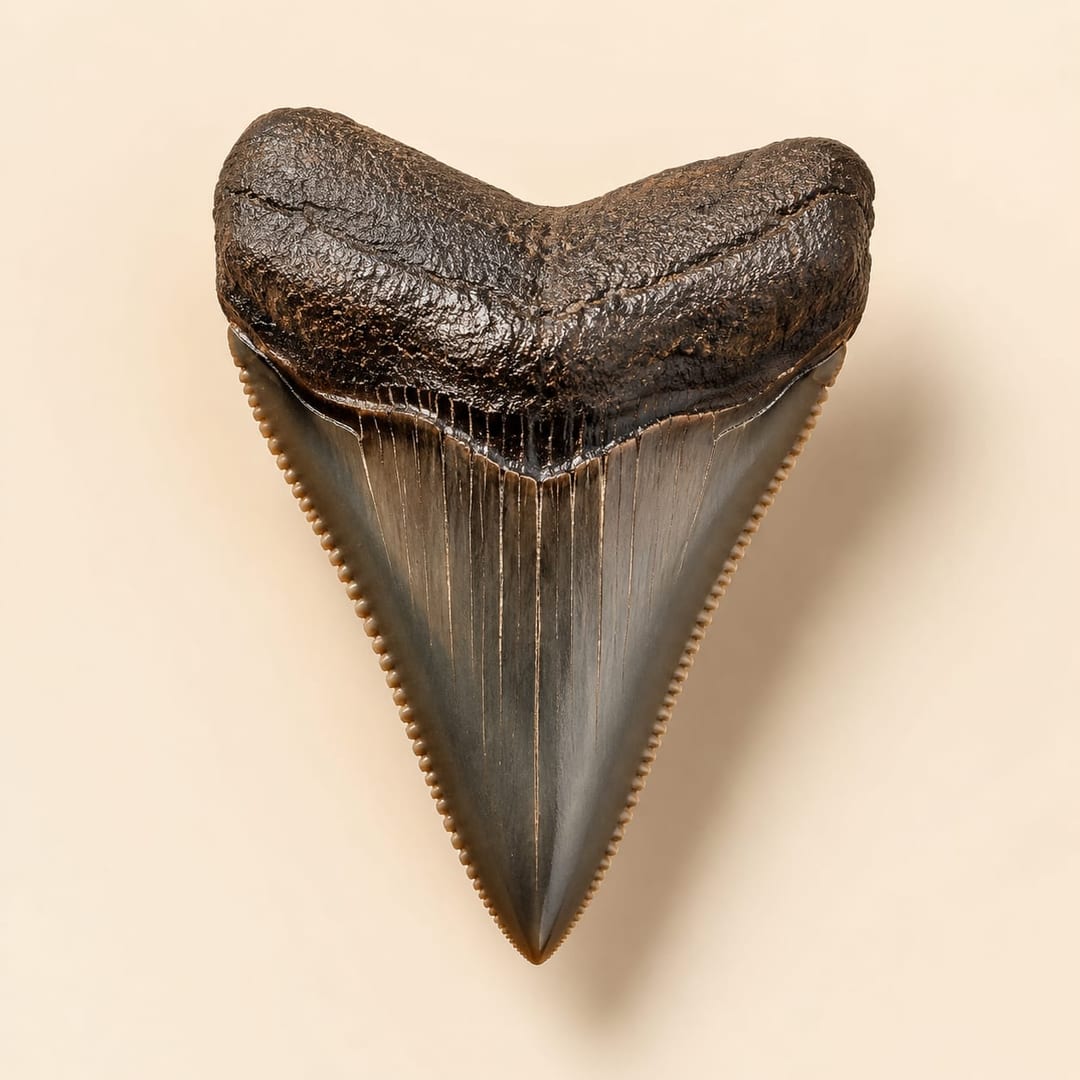
To get the most precise results from any automated analysis, understanding the anatomy of a tooth is helpful. The three main components to observe are the crown (the exposed part), the root (the part embedded in the jaw), and the neck (where they meet). Distinct species have unique combinations of these features. For instance, Megalodon teeth are famous not just for their massive size but for their robust, serrated edges and distinct bourlette. In contrast, Mako teeth are typically long, slender, and smooth-edged, designed for grasping slippery prey rather than sawing through flesh.
When preparing your specimen for analysis, try to clean off any sand or debris that might obscure these features. A gentle brush with water is usually sufficient. Pay close attention to the serrations; are they large and irregular, or fine and uniform? Does the tooth have secondary cusplets (small mini-teeth on the side of the main blade)? These minute details are often the "smoking gun" for species determination. By noting these traits in the optional description fields, you help the system confirm the visual data, ensuring you receive the correct classification for your prehistoric discovery.
Recognizing Common Species
Our platform is designed to recognize a vast array of species, ranging from the common to the rare. Among the most sought-after finds are those of the Otodus megalodon, the largest shark to ever live. However, collectors frequently encounter other fascinating species such as the Tiger Shark (Galeocerdo), known for its unique cockscomb shape and heavy serrations, or the Sand Tiger, which features long, needle-like teeth. You might also discover specimens from the Crow Shark (Squalicorax), a Cretaceous era predator, or the Snaggletooth Shark (Hemipristis serra).
Preserving the history of these apex predators is a rewarding hobby. Each find tells a story of an ancient marine ecosystem. By correctly naming your specimens, you contribute to a broader understanding of fossil distribution and biodiversity. This resource aims to bridge the gap between scientific expertise and recreational hunting, making paleontology accessible to everyone. Whether you have a single curious find or a bucket full of gravel to sort through, our system stands ready to assist you in uncovering the secrets of the deep past.
Put what you’ve learned to use
Upload your photos and compare the suggested match with the features you observed.
Frequently Asked Questions
Is this shark tooth identifier free to use?
Yes, the shark tooth identifier is free to use, with a generous daily allowance of identifications and no sign-up required. For unlimited identifications, unlimited AI chat, and saved collections, you can upgrade to IdentifyRock Unlimited.
Do I need to download an app to identify my fossils?
No, this is a web-based tool. You can access it directly through your browser on any device, meaning no app download is required to use the service.
Do I need to create an account or sign up?
No sign-up is necessary. We believe in providing instant access, so you can start identifying your shark teeth immediately without registering.
How does the AI identification work?
Our system uses advanced computer vision and machine learning trained on thousands of verified shark tooth specimens. It analyzes shapes, serration patterns, and root structures to suggest the most likely species.
Can this tool identify Megalodon teeth?
Yes! Our database includes the Otodus megalodon, identifying it based on its large size, triangular shape, bourlette, and fine serrations.
Does it work for both modern and fossilized teeth?
While the tool is optimized for fossils typically found by beachcombers, it can also identify modern species based on their morphological characteristics.
How accurate is the identification?
The AI is highly accurate for common species, but results depend heavily on photo quality. Clear, well-lit photos showing the serrations and root yield the best results.
Is there a limit to how many photos I can upload?
The free version includes a generous daily allowance of identifications, enough for most collectors. To catalog an entire collection without a daily cap, plus unlimited AI chat and saved collections, you can upgrade to IdentifyRock Unlimited.
What if my shark tooth is broken?
The AI can still attempt an identification based on remaining features like the root or blade thickness, though a complete specimen always provides higher confidence matches.
Does this tool estimate the monetary value of the tooth?
No, this tool focuses solely on species classification. We do not provide appraisals or value estimates for fossils.
How should I clean the tooth before taking a picture?
Gently rinse the specimen with water and use a soft brush to remove sand or clay. Ensure the serrations are visible and not clogged with debris for the best analysis.
Is my uploaded photo private?
Yes, your photos are processed securely for the purpose of identification and are not shared publicly without your consent.
Ready to give it a try?
Upload your photos for an AI-assisted best match.