Quartz Identifier
Instantly recognize quartz varieties and mineral specimens with our advanced AI technology.
Identification form
Upload quartz crystal photos
Clear, well-lit images help the AI identify it more accurately.
Unlock Unlimited Access
- Unlimited Identifications
- Unlimited AI Chat Messages
- Save and Organize Your Collection
How to Use the Quartz Identifier
- 1
Snap a Clear Photo
Click "Upload Images" to select a photo of your crystal. For the most accurate mineral recognition, ensure the specimen is backlit or well-lit by natural daylight and placed on a neutral background to show transparency.
- 2
Capture Details & Angles
Upload multiple photos to assist the AI. Close-ups of the termination points, horizontal striations on the faces, or the fracture pattern provide vital clues. Tip: A clean surface helps distinguish internal inclusions from surface dirt.
- 3
Provide the Location
Tell us where the mineral was found. Geography is a key factor—a crystal found in an alpine cleft may differ significantly from water-worn pebbles found on a beach.
- 4
Add Observations
Input specific physical traits to refine the analysis. Note the hardness (quartz scratches glass), luster (is it glassy/vitreous?), and transparency levels to help narrow down specific varieties.
- 5
Get Instant Results
Click "Identify Quartz" to start the processing. Our system will compare your images against a vast database of geological samples to provide the closest variety matches.
Ready to identify it?
Upload one or more clear photos to get started.
The Diversity of Quartz Minerals
Quartz is the second most abundant mineral in Earth's continental crust, making it a staple for collectors and geologists alike. While it is chemically simple—composed of silicon dioxide (SiO2)—it manifests in a staggering array of colors and habits. This diversity can make visual recognition challenging for beginners. The mineral typically forms in the hexagonal crystal system, often appearing as six-sided prisms terminated by six-sided pyramids. However, it can also occur in massive forms where no distinct crystal shape is visible.
The variations in color are usually caused by trace impurities or exposure to natural radiation. For instance, the presence of iron can turn the crystal purple, creating Amethyst, while titanium or manganese can result in the soft pink hues of Rose Quartz. Natural radiation interacting with aluminum impurities creates the dark, mysterious tones of Smoky Quartz. Because these varieties look so different, having a reliable digital companion to assist with recognition is incredibly valuable. Our system analyzes these color signatures and growth patterns to help you distinguish between the different members of this vast mineral family.
Key Physical Properties for Verification
To confirm the identity of a specimen beyond a simple visual check, geologists rely on specific physical properties. One of the most defining characteristics is hardness. On the Mohs scale, this mineral sits at a solid 7. This means it is hard enough to scratch standard window glass or a steel knife blade, but it will be scratched by harder minerals like Topaz or Corundum. If your specimen can be scratched by a copper penny or a steel nail, it is likely a softer mineral such as Calcite or Gypsum, not silica-based.
Another diagnostic feature is the fracture. Unlike minerals that split along flat, even planes (cleavage), silica minerals typically break with a conchoidal fracture. This results in a curved, shell-like surface that looks similar to broken glass. Additionally, collectors should look for striations—fine horizontal lines that run perpendicular to the long axis of the crystal faces. These lines are a strong indicator of the mineral's identity and help distinguish it from look-alikes. When using our platform, ensuring these physical traits are visible in your imagery significantly increases the accuracy of the result.
Macrocrystalline vs. Cryptocrystalline
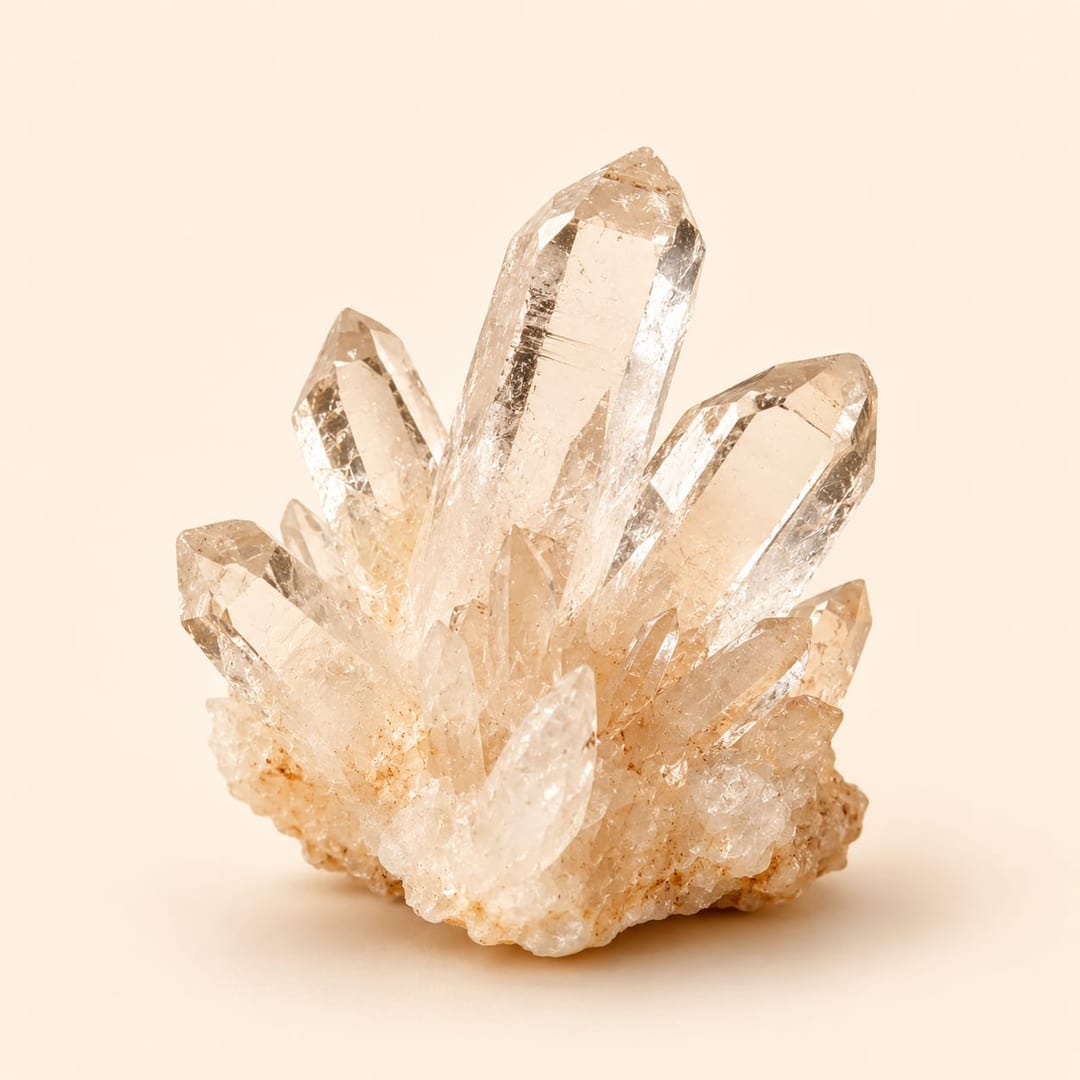
When sorting through specimens, it is helpful to understand the two main categories: Macrocrystalline and Cryptocrystalline. Macrocrystalline varieties form crystals large enough to be seen with the naked eye. This group includes the popular gemstones found in jewelry and collections, such as Citrine (yellow to orange), Rock Crystal (clear and colorless), and Prasiolite (green). These usually form in geodes, pegmatites, or hydrothermal veins and often exhibit distinct termination points.
In contrast, Cryptocrystalline varieties are composed of microscopic crystals that are tightly packed together. These are often translucent to opaque and include the vast Chalcedony family. Famous members of this group include Agate, known for its beautiful banding; Jasper, which is typically opaque and red or brown; and Onyx, which features parallel bands. Because these stones rarely show external crystal faces, recognition relies heavily on color, pattern, and luster. A wax-like or dull luster is common for these micro-varieties, distinguishing them from the vitreous (glassy) luster of their macro counterparts. Our technology is trained to discern these textural differences to provide a precise classification.
Spotting Fakes and Imitations
Because of its popularity, this mineral is frequently imitated by glass or synthetic materials. Distinguishing a natural stone from a synthetic fake is a crucial skill for any enthusiast. One of the easiest tell-tale signs of glass is the presence of air bubbles. Natural crystals may contain fluid inclusions (liquid trapped inside) or other mineral deposits, but they will almost never contain perfectly round gas bubbles, which are a byproduct of the glass-manufacturing process.
Additionally, synthetic lab-grown crystals often look "too perfect." They may lack the natural zoning (uneven color distribution) or minor flaws seen in earth-mined stones. For example, natural Turquoise or dyed Howlite are often sold as mimics, but silica-based fakes are also common. Another factor is thermal conductivity; real crystal tends to feel cool to the touch initially and warms up slowly, whereas glass or plastic reaches body temperature much faster. While digital analysis is powerful, combining it with these tactile observations ensures you aren't fooled by a clever imitation. Always inspect your specimen under magnification if possible to look for these microscopic clues.
Put what you’ve learned to use
Upload your photos and compare the suggested match with the features you observed.
Frequently Asked Questions
Is this quartz identifier free to use?
Yes, the quartz identifier is free to use, with a generous daily allowance of identifications and no sign-up required. For unlimited identifications, unlimited AI chat, and saved collections, you can upgrade to IdentifyRock Unlimited.
Do I need to download an app to use this tool?
No download is required. This is a web-based application that works directly in your browser, saving storage space on your device while providing powerful recognition capabilities.
How accurate is the AI at identifying quartz varieties?
Our AI is trained on thousands of geological datasets and achieves high accuracy for common varieties like Amethyst, Citrine, and Smoky Quartz. However, visual identification has limits, so physical testing (like hardness) is recommended for confirmation.
Can I use this tool on my mobile phone?
Absolutely. The interface is fully responsive and optimized for mobile devices, allowing you to snap photos in the field and get results immediately.
Do I need to create an account to identify crystals?
No sign-up or registration is necessary. We value your convenience and privacy, so you can start uploading images and getting results instantly without creating a profile.
Can this tool distinguish between real quartz and glass?
While the AI analyzes visual patterns like fracture and inclusions, distinguishing high-quality glass from clear crystal by photo alone can be difficult. We recommend checking for air bubbles (common in glass) or performing a scratch test.
Does the identifier recognize raw and tumbled stones?
Yes, the system is designed to recognize both raw, terminated points and polished or tumbled stones, provided the color and texture are clearly visible in the image.
What is the best lighting for taking photos of quartz?
Natural, diffused daylight is best. It renders colors accurately and helps reveal internal structures or phantoms without creating harsh glare that obscures surface details.
Can it identify specific inclusions like Tourmalinated Quartz?
Yes, if the inclusions (such as black Tourmaline needles or Golden Rutiles) are clearly visible in the photograph, the AI can often identify these specific sub-varieties.
Is there a limit to how many photos I can upload?
The free version includes a generous daily allowance of identifications, and each identification can include multiple photos to improve accuracy. To identify without a daily cap, plus unlimited AI chat and saved collections, you can upgrade to IdentifyRock Unlimited.
What should I do if the result seems incorrect?
If the result seems off, try cleaning the specimen and taking a new photo from a different angle, specifically focusing on the crystal termination or fracture surfaces. Inputting additional notes also helps.
How long does the identification process take?
The analysis is near-instantaneous. Once your photo is uploaded, the results typically appear within a few seconds, depending on your internet connection speed.
Ready to give it a try?
Upload your photos for an AI-assisted best match.