Pearl Identifier
Accurate AI analysis to distinguish natural, cultured, and imitation pearls instantly
Identification form
Upload pearl photos
Clear, well-lit images help the AI identify it more accurately.
Unlock Unlimited Access
- Unlimited Identifications
- Unlimited AI Chat Messages
- Save and Organize Your Collection
How to Identify Your Pearl
- 1
Snap a Clear Photo
Click "Upload Images" to select a photo. For the most accurate pearl assessment, use soft, diffused natural lighting to capture the luster without harsh glare. Place the gem on a plain white or gray background.
- 2
Capture Details & Angles
Upload extra photos to assist the AI. Close-ups of the drill hole, surface blemishes, or the reflection on the surface (luster) provide vital clues. Tip: If it is a strand, capture the knotting between gems.
- 3
Provide the Context
Tell us where the item was found. Context is a key factor—a pearl found in high-end vintage jewelry often differs from one found in costume accessories or craft supplies.
- 4
Add Observations
Input specific traits to narrow down the results. Note the texture (is it gritty like sand or smooth like plastic?), temperature (is it cool to the touch?), or weight.
- 5
Get Instant Results
Click "Identify Pearl" to start the analysis. Our tool will compare your photos against thousands of organic gem profiles to determine if it is natural, cultured, or imitation.
Ready to identify it?
Upload one or more clear photos to get started.
Real vs. Imitation: The Basics
Distinguishing a genuine organic gemstone from a synthetic imitation is the first challenge for any collector. Pearls are unique because they are created by living creatures—mollusks—rather than formed deep underground like diamonds or rubies. This biological origin gives them a specific texture and structural depth that is difficult to replicate with glass or plastic. When you are examining a potential treasure, the surface tells a story. A natural or cultured specimen will rarely be perfect; it will have tiny inconsistencies, ridges, or variances in its reflection.
Imitations, often sold as costume jewelry, tend to be too perfect. They may look glassy or have a flat, painted appearance. One of the primary indicators is the "gritty" feel. Because real nacre is made of microscopic crystal platelets deposited in layers, it provides friction when rubbed against a tooth. In contrast, imitation beads usually slide effortlessly because their coating is smooth paint. Understanding these physical properties helps you interpret the visual results provided by digital scanners, ensuring you don't mistake a valuable heirloom for a plastic trinket.
Classifying Different Varieties
Not all aquatic gems are created equal. They are generally categorized by the oyster or mussel species that produced them and the region where they were harvested. Freshwater varieties are the most abundant and affordable, known for their wide range of pastel colors and often irregular shapes. They are typically composed entirely of nacre, making them durable. On the higher end of the spectrum, Akoya gems from Japan are prized for their perfect roundness and brilliant, mirror-like luster.
Moving into the exotic categories, Tahitian specimens are famous for their dark, dramatic colors ranging from slate grey to peacock green. They are naturally dark, unlike dyed imitations. Finally, South Sea varieties are the largest and rarest, often appearing in satin-white or deep golden hues. Recognizing these categories is essential for valuation. A large golden bead might be a valuable South Sea gem, or it could be a dyed Freshwater bead. By analyzing specific traits like size, color saturation, and surface quality, enthusiasts can begin to pinpoint the specific variety they possess.
Grading and Quality Factors
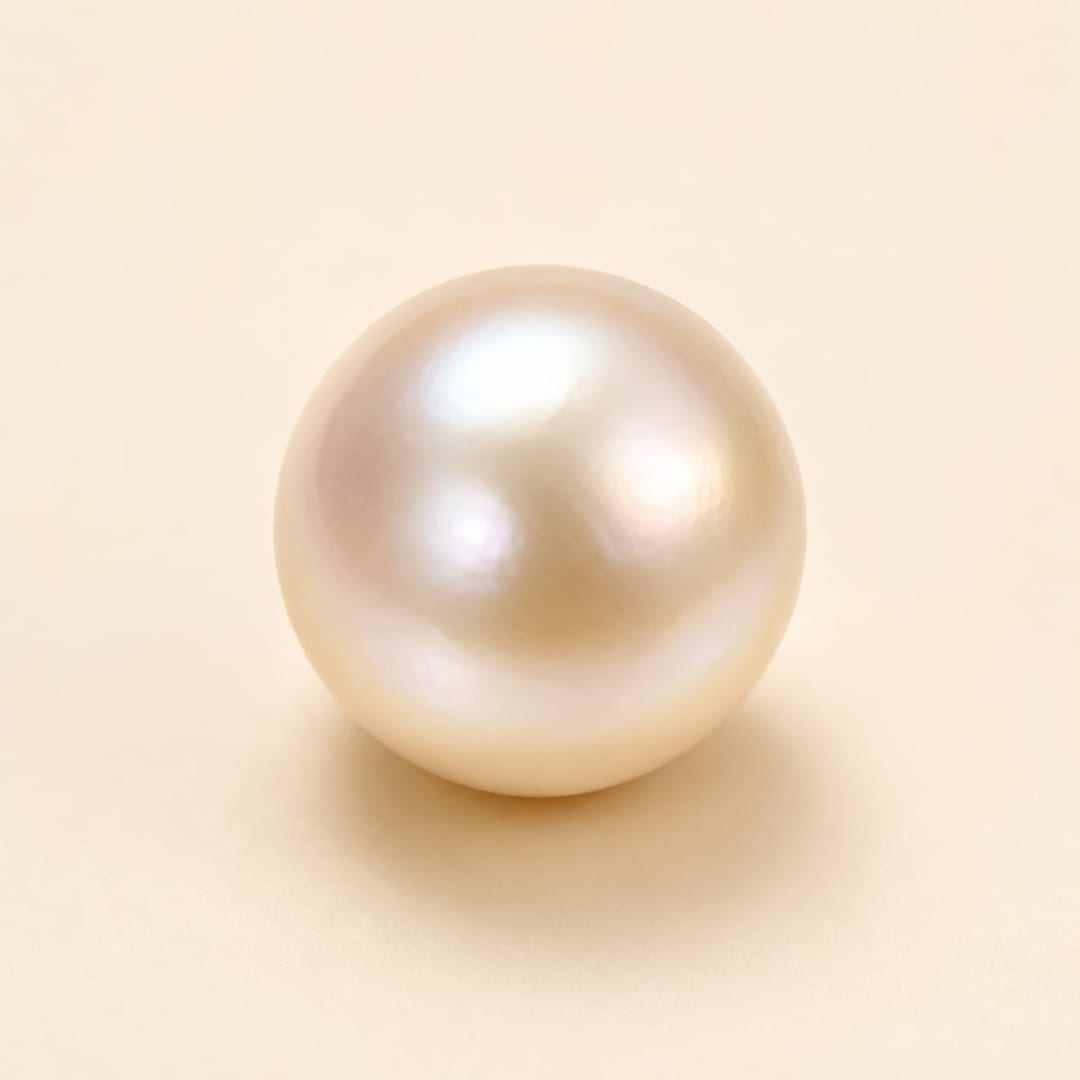
When determining the quality of a specimen, professionals use a specific set of criteria. The most critical factor is luster—the intensity and sharpness of the light reflected from the surface. A high-quality gem should act like a mirror; if you look at it, you should see your reflection clearly. If the reflection is hazy or dull, the value decreases significantly. Surface quality is another major metric; while minor blemishes are proof of authenticity, heavily spotted or pitted surfaces reduce desirability.
Shape and size also play distinct roles. While perfectly round spheres command the highest prices in the traditional market, off-round or "baroque" shapes have gained popularity for their unique artistic appeal. Finally, nacre quality—the thickness of the pearly coating—determines longevity. A bead with thin nacre might eventually peel or lose its shine. By paying attention to these attributes, you can estimate whether a piece is fine jewelry worth insuring or a fun accessory for casual wear.
The Role of AI in Analysis
The integration of artificial intelligence into gemology has revolutionized how we analyze organic materials. In the past, authentication required a visit to a jeweler and the use of a loupe or microscope. Today, computer vision algorithms can detect subtle visual cues that the human eye might miss. By analyzing thousands of reference images, modern software can map the way light interacts with the curvature of a bead to predict its composition.
This technology looks for the "fingerprint" of the gem—the specific way nacre layers stack and reflect light. It can differentiate between the sharp, distinct reflection of an Akoya and the soft, satin glow of a South Sea specimen. It can also spot the tell-tale signs of mass production found in glass or plastic fakes, such as peeling around the drill hole or unnatural uniformity. While digital analysis is a powerful starting point, it serves as a bridge to professional appraisal, giving users immediate insight into their collection without leaving home.
Put what you’ve learned to use
Upload your photos and compare the suggested match with the features you observed.
Frequently Asked Questions
Is this pearl identifier free to use?
Yes, the pearl identifier is free to use, with a generous daily allowance of identifications and no sign-up required. For unlimited identifications, unlimited AI chat, and saved collections, you can upgrade to IdentifyRock Unlimited.
Do I need to download an app to use this?
No download is required. This is a browser-based web application, meaning you can access it directly from your phone, tablet, or desktop computer without installing software.
Is there a limit to how many pearls I can identify?
The free version includes a generous daily allowance of identifications, enough to check most jewelry. To sort through entire collections without a daily cap, plus unlimited AI chat and saved collections, you can upgrade to IdentifyRock Unlimited.
Do I need to sign up or create an account?
No, we prioritize your convenience and privacy. You do not need to register, provide an email address, or create an account to use the identification features.
How accurate is the AI at identifying real vs. fake pearls?
Our AI is trained on a vast dataset of organic and imitation textures. While it is highly effective at distinguishing the sharp, mirror-like reflection of real nacre from the dull or plasticky look of fakes, physical tests (like the tooth test) are recommended for verification.
What is the 'tooth test' mentioned in pearl identification?
The tooth test involves gently rubbing the gem against the cutting edge of your tooth. Real nacre feels slightly gritty or sandy due to its crystalline structure, whereas imitation beads usually feel perfectly smooth.
Can this tool identify specific types like Akoya or Tahitian?
Yes, by analyzing color, overtone, size, and luster, the system can suggest the likely variety, such as Akoya, Freshwater, Tahitian, or South Sea, based on visual characteristics.
Does it work on pearls that are set in jewelry?
Absolutely. While loose gems allow for easier inspection of the drill holes, our system can analyze mounted gems in rings, earrings, and necklaces provided the photo is clear.
What helps the AI make a better match?
Lighting is critical. Avoid flash photography which causes whiteout. Instead, use indirect daylight to show the depth of the luster. Close-up macro shots of surface imperfections also help.
Can it detect 'Majorica' pearls?
Yes. Majorica pearls are high-quality man-made imitations. The system looks for the specific perfection and uniformity typical of manufactured beads versus the subtle irregularities of organic growth.
Why is the drill hole important for identification?
The area around the drill hole often reveals the internal structure. Imitations may show peeling paint or rough edges, while real gems show a clean, crisp edge where the nacre layers end.
Is my photo data stored privately?
We value your privacy. Photos are processed for the purpose of analysis and are not permanently stored in a public gallery or used without your permission.
Ready to give it a try?
Upload your photos for an AI-assisted best match.