Ore Identifier
Instantly identify metallic rocks, minerals, and raw ores with our advanced AI identification tool.
Identification form
Upload ore photos
Clear, well-lit images help the AI identify it more accurately.
Unlock Unlimited Access
- Unlimited Identifications
- Unlimited AI Chat Messages
- Save and Organize Your Collection
How to Identify Ores by Photo
- 1
Snap a Clear Photo
Click "Upload Images" to select a photo of your specimen. For the most accurate ore identification, ensure the rock is well-lit (natural daylight is best) and placed on a plain, non-distracting background.
- 2
Capture Details & Angles
Ores often have specific crystal structures or metallic lusters. Upload close-ups of any fractured surfaces, visible grains, or metallic flecks. A wet surface can sometimes reveal mineral colors obscured by dust.
- 3
Provide the Location
Geography is crucial for geological identification. Tell us where the ore was found (e.g., "near an old copper mine" or "in a riverbed"). Specific regions are known for specific mineral deposits.
- 4
Add Observations
Input physical traits that a camera cannot capture. Note the specific gravity (is it heavy?), magnetism (does it attract a magnet?), and the streak color (the color of the powder when rubbed on ceramic).
- 5
Get Instant Results
Click "Identify Ore" to start the AI analysis. Our tool compares your photos against a vast database of mineralogy samples to provide the closest matches, including potential economic value and chemical composition.
Ready to identify it?
Upload one or more clear photos to get started.
Understanding Ores: More Than Just Rocks
In the world of geology and rockhounding, the term ore holds a specific economic and chemical definition. Unlike a standard rock, which is simply an aggregate of various minerals, an ore is a natural occurrence of rock or sediment that contains sufficient minerals with economically important elements, typically metals, that can be extracted from the deposit. The ores are extracted from the earth through mining; they are then refined (often via smelting) to extract the valuable element, or metal.
Identifying an ore is the first step in prospecting. The grade of ore refers to the concentration of the desired material it contains. The value of an ore deposit is determined by the concentration of the metal in the ore, as well as the cost of extraction. Common examples include Hematite and Magnetite (ores of iron), Bauxite (ore of aluminum), Galena (ore of lead), and Chalcopyrite (ore of copper). Understanding the difference between a pretty mineral specimen and a viable ore sample is crucial for prospectors and geology enthusiasts alike.
Key Visual Properties for Identification
When attempting to use an ore identifier, visual cues are your primary data points. While chemical analysis is the gold standard, physical properties visible to the naked eye (or a camera lens) are incredibly telling. Luster is one of the most important traits for ores. Many ore minerals, being metallic, will exhibit a metallic or sub-metallic luster, appearing shiny like polished metal. Non-metallic ores might look resinous, glassy, or dull (earthy).
Color can be helpful but is often deceptive due to tarnish or impurities. For example, fresh copper is distinctively reddish-orange, but when oxidized, it turns green (malachite) or blue (azurite). Similarly, silver ores can appear black due to sulfur exposure. Therefore, looking for a fresh fracture—a broken surface that hasn't been exposed to the elements—is vital for accurate visual identification. Crystal habit, or the shape in which the mineral grows (e.g., cubic, hexagonal, fibrous), also provides a unique fingerprint for the AI to analyze.
The Importance of Streak and Hardness
Two of the most reliable field tests for confirming an ore's identity are the streak test and the hardness test. The streak is the color of the mineral in its powdered form. You can observe this by rubbing the mineral across an unglazed porcelain tile (a streak plate). For instance, Hematite may look black or gray on the outside, but it will always leave a reddish-brown streak. Gold leaves a yellow streak, while its lookalike, Pyrite, leaves a greenish-black streak. This distinction is often the quickest way to identify 'fool's gold.'
Hardness is measured on the Mohs scale, ranging from 1 (Talc) to 10 (Diamond). Knowing whether your specimen can scratch glass (hardness ~5.5) or is scratched by a copper penny (hardness ~3.0) helps narrow down the possibilities significantly. While you cannot perform these tests directly through a photo upload, adding these observations to the 'notes' section of our ore identifier tool drastically improves the accuracy of the result.
Heft and Magnetism: The Invisible Clues
One characteristic that photos cannot convey is specific gravity, often referred to simply as 'heft.' Ores are typically much denser than average rocks due to their metallic content. A small piece of Galena (lead ore) or Wolframite (tungsten ore) will feel surprisingly heavy for its size compared to a similar-sized piece of quartz or limestone. If you pick up a rock and it feels exceptionally dense, there is a high probability it is a metal-bearing ore.
Magnetism is another diagnostic property. Magnetite is strongly magnetic and will attract a standard magnet. Pyrrhotite is weakly magnetic. Some varieties of Hematite can also be slightly magnetic. Checking your specimen with a magnet is a quick pass/fail test for iron-bearing ores. When using our online identifier, always mention in the description if the rock is magnetic or heavy, as this helps the AI differentiate between visual lookalikes that have vastly different chemical compositions.
Common Ores You Might Find
Familiarizing yourself with common ores helps in successful identification. Iron Ores are the most abundant. Magnetite is black and magnetic; Hematite varies from red to metallic gray. Copper Ores are often colorful. Chalcopyrite looks like brassy yellow gold but is brittle; Malachite is a vibrant green carbonate; Azurite is deep blue. These secondary copper minerals often indicate the presence of primary copper deposits deeper underground.
Lead and Zinc Ores often occur together. Galena (lead) forms shiny, metallic gray cubes with perfect cleavage. Sphalerite (zinc) can be tricky, ranging from yellow to dark brown (blackjack) with a resinous luster. Aluminum Ore, primarily Bauxite, doesn't look metallic at all; it often resembles reddish clay with pea-sized nodules (pisolites). Recognizing these common forms allows you to better judge the results provided by digital identification tools and understand the geological potential of the area you are exploring.
Gold, Silver, and Precious Metal Ores
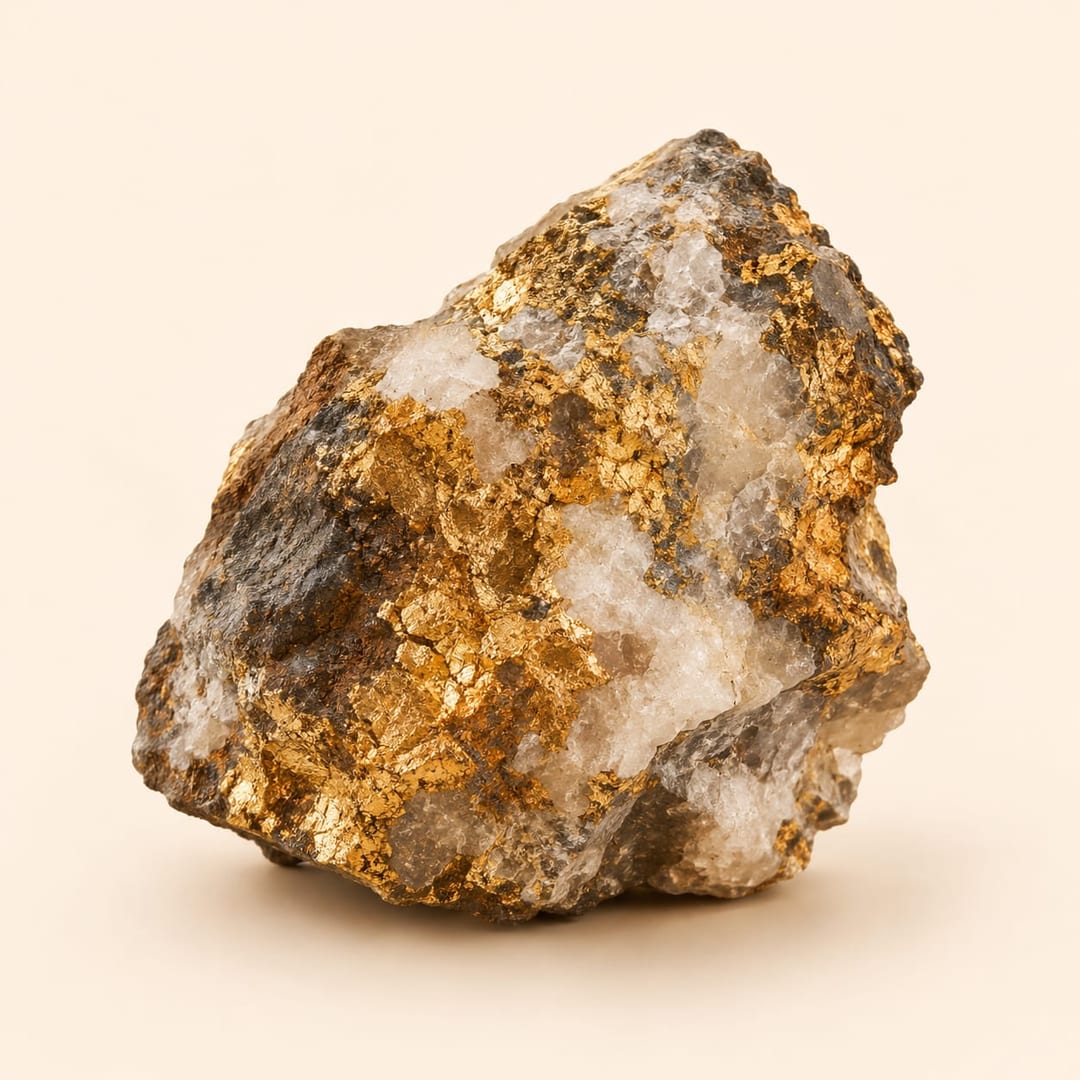
The quest for Gold and Silver drives many rockhounds, but identifying these precious metal ores requires a keen eye. Native gold is rare; it usually occurs as microscopic particles within quartz veins or locked inside sulfide minerals. Placer gold (nuggets or flakes in water) is malleable—it dents when hit, whereas Pyrite shatters. Pyrite also has striations (parallel lines) on its crystal faces, which gold lacks.
Silver ores are rarely shiny white in the wild. They usually appear as black, gray, or tarnished coatings. Acanthite and Argentite are common silver sulfides that look like dull gray blobs. Chlorargyrite (horn silver) looks like wax. Because precious metals often occur in trace amounts invisible to the naked eye, identifying the host rock or indicator minerals (like iron-stained quartz or black sands) using our ore identifier is often the most effective strategy for finding potential deposits.
Essential Tools for the Prospector
While our online ore identifier is a powerful tool, carrying a basic physical toolkit enhances your ability to identify specimens in the field. A Geologist's Hammer allows you to break open weathered rocks to reveal fresh surfaces, which are essential for accurate visual ID. A Hand Lens (or loupe) with 10x magnification is indispensable for seeing crystal structures and grains that the naked eye misses.
A Streak Plate (a tile of unglazed porcelain) is used to test powder color, while a small Magnet helps identify iron minerals. Some prospectors also carry a small bottle of diluted acid (vinegar or weak hydrochloric acid) to test for carbonates like calcite, which fizz on contact, though this is less relevant for metallic ores. Combining these physical field tests with the visual pattern recognition of our AI tool provides a comprehensive identification system for any prospector.
Ethics and Safety in Ore Hunting
Rockhounding and prospecting are rewarding hobbies, but they come with responsibilities. Always respect private property and existing mining claims. In many countries, minerals found on private land belong to the landowner, and active claims on public land give the claim holder exclusive rights to the minerals. It is your duty to check maps and regulations before removing any ore samples.
Furthermore, prioritize safety. Old mine sites are notoriously dangerous due to unstable ground, hidden shafts, and toxic chemicals. Never enter an abandoned mine tunnel. When handling ores, be aware that some minerals contain toxic elements like arsenic, mercury, or lead. Avoid inhaling dust from rocks you break open, and wash your hands thoroughly after handling specimens. Our ore identifier promotes safe, non-invasive identification by allowing you to analyze rocks through photos without necessarily needing to disturb the environment extensively.
Put what you’ve learned to use
Upload your photos and compare the suggested match with the features you observed.
Frequently Asked Questions
Is this ore identifier tool free to use?
Yes, the ore identifier is free to use, with a generous daily allowance of identifications and no sign-up required. For unlimited identifications, unlimited AI chat, and saved collections, you can upgrade to IdentifyRock Unlimited.
Do I need to download an app to use this tool?
No, there is no app download required. This is a web-based online web app that works directly in your browser on both desktop and mobile devices.
How accurate is the AI at identifying ores?
Our AI is trained on a massive dataset of geological samples and is highly accurate for common ores and minerals. However, for potential mining claims or high-value assessments, we always recommend professional laboratory verification.
Do I need to sign up or create an account?
No, you do not need to register. You can start identifying ores instantly without providing an email address or creating a password. It is a no sign-up service.
Can this tool identify gold and silver?
Yes, the tool can help identify potential precious metals like gold and silver, and importantly, it can help distinguish them from common lookalikes like pyrite (fool's gold) or mica.
What is the difference between a rock and an ore?
A rock is an aggregate of minerals. An ore is a specific type of rock that contains sufficient minerals with important elements, typically metals, that can be economically extracted from the rock.
Why does the tool ask for the location?
Geological context is a major clue. Certain ores are only found in specific geological environments (e.g., hydrothermal vents vs. sedimentary beds). Knowing the location helps the AI narrow down the possibilities.
What if my rock looks different when it is wet?
We recommend taking photos of the ore both dry and wet if possible. Water can enhance the contrast and reveal the true colors of the mineral grains, aiding in accurate identification.
Can I use this tool for meteorites?
While the tool focuses on terrestrial ores, it can identify metallic characteristics common in iron meteorites. However, confirming a meteorite usually requires specialized testing for nickel content.
Does the identifier work on mobile phones?
Absolutely. The interface is fully responsive and optimized for mobile use, allowing you to snap a photo in the field and identify it immediately.
Is it safe to handle all ores?
Most are safe, but some ores containing arsenic (like arsenopyrite), lead (galena), or mercury (cinnabar) can be toxic if ingested or handled improperly. Always wash your hands after handling unknown specimens.
What should I do if the result says 'Unknown'?
If the AI cannot identify the specimen, try cleaning the rock, taking a photo in better lighting, or providing more detailed notes about its hardness and weight. Some rare specimens may require a professional geologist.
Ready to give it a try?
Upload your photos for an AI-assisted best match.