Obsidian Identifier
Instantly identify natural volcanic glass and distinguish it from slag or onyx with our accurate AI technology.
Identification form
Upload obsidian photos
Clear, well-lit images help the AI identify it more accurately.
Unlock Unlimited Access
- Unlimited Identifications
- Unlimited AI Chat Messages
- Save and Organize Your Collection
How to Identify Obsidian
- 1
Snap a Clear Photo
Click "Upload Images" to select a photo. For the most accurate obsidian recognition, ensure the specimen is well-lit (natural daylight is best) and placed on a plain background to highlight its glassy texture.
- 2
Capture Details & Angles
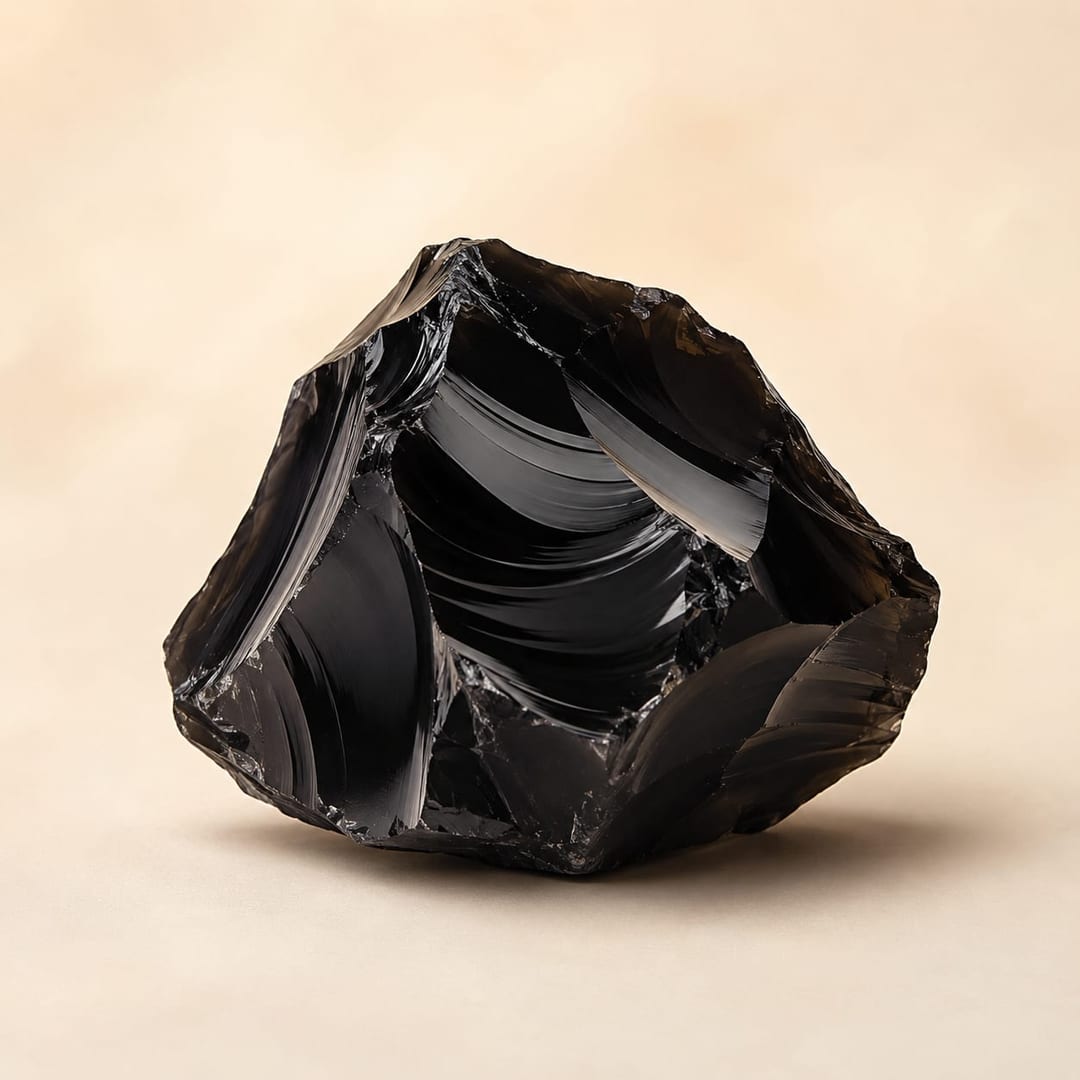
Upload extra photos to help the AI. Close-ups of the conchoidal (shell-like) fractures, translucent edges, or any inclusions like white cristobalite patterns provide vital clues.
- 3
Provide the Location
Tell us where the stone was found. Geography is a key factor—obsidian is strictly found in areas with past or present rhyolitic volcanic activity.
- 4
Add Observations
Input specific traits to narrow down the results. Note the luster (is it vitreous/glassy?), opacity (does light pass through thin edges?), and sharpness of the broken edges.
- 5
Get Instant Results
Click "Identify Obsidian" to start the analysis. Our system will compare your photos against a database of volcanic glass samples to provide the closest matches.
Ready to identify it?
Upload one or more clear photos to get started.
The Geology of Obsidian
Obsidian is a naturally occurring volcanic glass formed as an extrusive igneous rock. It is produced when felsic lava extruded from a volcano cools rapidly with minimal crystal growth. Because of this rapid cooling, the atoms inside the lava are unable to arrange themselves into a crystalline structure, resulting in an amorphous material with a smooth, uniform texture. This lack of crystal structure is what gives the stone its characteristic conchoidal fracture, meaning it breaks with sharp, curved edges similar to the inside of a seashell.
Historically, this material was highly valued by Stone Age cultures because, unlike most rocks, it could be fractured to produce extremely sharp blades or arrowheads. While typically jet black, the presence of impurities can result in various colors. For example, the presence of iron oxide (hematite) produces reddish-brown varieties known as Mahogany Obsidian. Understanding the geological formation is crucial for accurate recognition, as the environment where it is found—usually near past or present rhyolitic eruptions—provides essential context for verifying a find.
Real Obsidian vs. Slag and Fakes
One of the biggest challenges for collectors is distinguishing natural volcanic glass from artificial glass, specifically industrial slag or cullet glass. Slag is a byproduct of smelting ores and can look remarkably similar to natural stones. However, there are key visual differences that a keen eye—and our digital system—can detect. Natural specimens generally appear cleaner and more uniform than slag. Slag often contains distinct, spherical air bubbles trapped inside during the industrial melting process, whereas natural samples rarely contain bubbles, and if they do, they are typically stretched or aligned with the flow of the lava.
Another indicator is the surface texture. While both materials have a vitreous luster, slag often has a greasy or oily sheen and may contain swirls of different colors that look unnatural. Furthermore, natural samples are often translucent at the thinnest edges. If you hold a thin flake up to the light, you should see light passing through, often with a smoky gray or brown tint. If the material is completely opaque even at the thinnest, sharpest edges, it might be a different mineral like black onyx or tourmaline, rather than true glass formed by volcanoes.
Common Varieties and Types
While the classic image of this stone is a deep, glossy black, there are numerous distinct varieties sought after by collectors and lapidary enthusiasts. These variations are caused by different chemical impurities and the cooling conditions of the lava flow. Snowflake Obsidian is a well-known variety containing white or gray spherulites—small, radial clusters of the mineral cristobalite—that form patterns resembling snowflakes against the black background. These inclusions indicate that the glass had begun to devitrify, or crystallize, slightly before cooling completely.
Other stunning types include Rainbow Obsidian and Sheen Obsidian (gold or silver). These varieties contain microscopic inclusions of magnetite nanoparticles or gas bubbles aligned in layers. When cut and polished at the correct angle, these inclusions refract light, creating a shimmering iridescence or a colorful banded effect. Apache Tears are small, rounded nodules of black glass, often found embedded in grayish-white perlite. Recognizing these specific patterns is a core capability of modern recognition technology, allowing users to not just label a rock as glass, but to pinpoint the specific trade name and geological subtype.
Physical Properties and Uses
Beyond its beauty, this material possesses unique physical properties that have defined its use for millennia. It has a hardness of about 5 to 6 on the Mohs scale, which is softer than quartz but harder than window glass. Its most defining trait, however, is its brittleness combined with extreme sharpness. A fresh blade made from this material can have a cutting edge distinct at the molecular level, far sharper than the finest steel surgical scalpels. This property makes it a favorite material for modern flintknapping hobbyists who recreate ancient tools like spear points and knives.
In the realm of metaphysics and crystal healing, this stone is often regarded as a powerful grounding and protective stone. It is said to absorb negative energy and provide emotional clarity. Whether you are a geologist looking at the silica content, an archaeologist studying trade routes of ancient artifacts, or a collector appreciating the aesthetic sheen, accurate recognition is the first step. Using a digital resource to confirm your find ensures you understand the value, history, and proper care for your specimen.
Put what you’ve learned to use
Upload your photos and compare the suggested match with the features you observed.
Frequently Asked Questions
Is this obsidian identifier free to use?
Yes, the obsidian identifier is free to use, with a generous daily allowance of identifications and no sign-up required. For unlimited identifications, unlimited AI chat, and saved collections, you can upgrade to IdentifyRock Unlimited.
Do I need to download an app to use this?
No, you do not need to install any software. This is a browser-based application that works directly on your mobile device, tablet, or desktop computer without requiring a download.
Is there a limit to how many obsidians I can identify?
The free version includes a generous daily allowance of identifications, plenty for most collectors. To catalog an entire collection of volcanic glass without a daily cap, plus unlimited AI chat and saved collections, you can upgrade to IdentifyRock Unlimited.
Do I need to sign up or create an account?
No registration is required. You can start analyzing your geological finds immediately without providing an email address or creating a user profile.
How does the AI identify obsidian?
Our system analyzes visual characteristics such as luster, fracture patterns, color variations, and texture in your uploaded photos, comparing them against a vast dataset of known geological samples.
Can it distinguish between obsidian and industrial slag?
Yes, the AI is trained to look for specific signs of natural formation versus artificial glass waste (slag), such as the presence of gas bubbles, color consistency, and location context.
Does this tool identify different types of obsidian?
Absolutely. It can help distinguish between common varieties such as black, snowflake, mahogany, rainbow, sheen, and spiderweb obsidian based on visual inclusions and color bands.
What is the most important visual cue for obsidian?
The most distinct feature is the conchoidal fracture—smooth, curved surfaces that look like the inside of a seashell. This fracture pattern is a primary indicator used by our technology.
Can I identify polished or tumbled obsidian?
Yes, while raw samples with fracture lines are easier to analyze, our algorithms can also recognize the vitreous luster and specific patterns found in polished or tumbled stones.
Is the identification 100% accurate?
While our AI is highly advanced and accurate, visual analysis has limitations. For definitive scientific confirmation, physical testing (such as hardness or refractive index tests) may be required.
Does the identifier work on mobile phones?
Yes, the interface is fully responsive and optimized for mobile devices, making it easy to take a picture in the field and get an immediate result.
Is my photo data private?
We prioritize your privacy. Photos uploaded for analysis are processed securely and are not publicly shared or used for purposes outside of providing your identification results.
Ready to give it a try?
Upload your photos for an AI-assisted best match.