Meteorite Identifier
Free Meteorite Identification Web App - Distinguish Space Rocks from Earth Rocks
Identification form
Upload meteorite photos
Clear, well-lit images help the AI identify it more accurately.
Unlock Unlimited Access
- Unlimited Identifications
- Unlimited AI Chat Messages
- Save and Organize Your Collection
How to use Meteorite Identifier
- 1
Snap a Clear Photo
Click "Upload Images" to select a photo. For meteorites, capturing the surface texture is critical. Try to photograph the object in natural sunlight to show true colors and any potential metallic glint.
- 2
Capture Surface Features
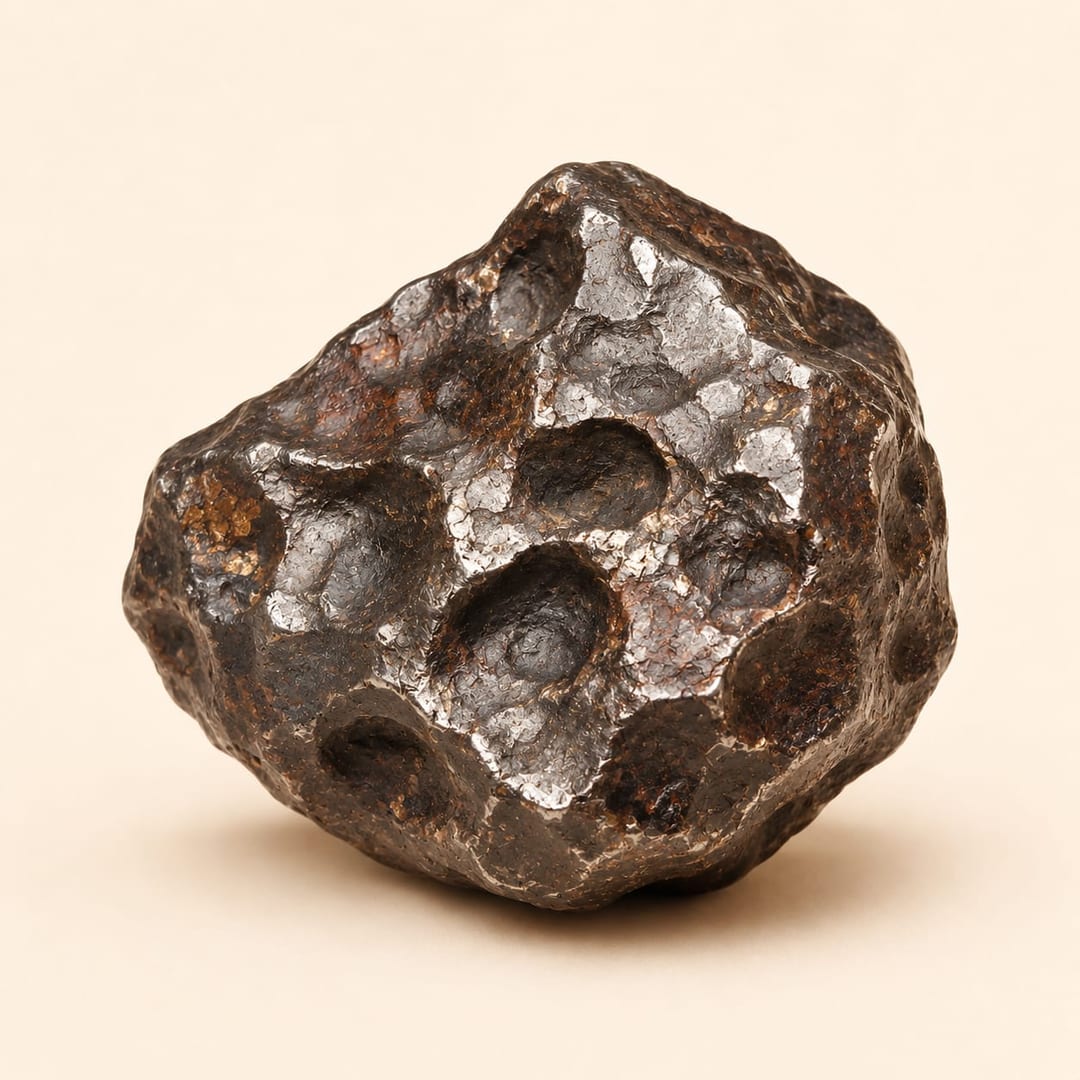
Upload close-ups. We need to look for a 'fusion crust' (a burnt, glassy rind) or 'regmaglypts' (thumbprint-like impressions). If you have filed a small window to see the interior, photograph that as well.
- 3
Pinpoint the Location
Context is vital. A rock found sitting on top of a frozen lake or a sand dune is more likely to be a meteorite than one found in a riverbed full of similar stones.
- 4
Add Physical Tests
Meteorite identification relies heavily on physical properties. Note if the rock attracts a magnet (most meteorites do), if it feels heavier than a normal rock of the same size, or if it lacks bubbles (vesicles).
- 5
Get Instant Analysis
Click "Identify Meteorite" to process the data. Our AI checks visual markers against databases of confirmed falls and common look-alikes (slag, magnetite, hematite) to give you a probability score.
Ready to identify it?
Upload one or more clear photos to get started.
Is That Rock from Outer Space?
Every year, thousands of tons of space debris enter Earth's atmosphere, but only a tiny fraction survives the fiery plunge to reach the ground. Finding a true meteorite is rare and thrilling—it is holding a piece of the early solar system in your hand. However, distinguishing a genuine visitor from space from a common Earth rock can be incredibly difficult for the untrained eye. This is where a specialized meteorite identifier becomes essential.
Most "meteorites" found by casual observers turn out to be "meteor-wrongs"—terrestrial rocks like hematite, magnetite, or industrial slag that share superficial traits with space rocks. Our tool is designed to help you filter out these imposters. By analyzing specific visual cues such as the presence of a fusion crust (the result of melting during atmospheric entry) and flow lines, we help bridge the gap between hopeful discovery and scientific verification. Whether you are a dedicated meteorite hunter scanning a strewn field or a homeowner puzzled by a heavy stone in your garden, accurate identification is the first step toward confirmation.
The Three Main Families of Meteorites
Meteorites are generally classified into three broad categories based on their composition: Irons, Stones, and Stony-Irons. A robust meteorite identifier looks for specific traits unique to each group.
Iron Meteorites are what most people picture when they think of space rocks. They are incredibly dense, strongly magnetic, and composed mostly of iron and nickel. They represent the cores of shattered asteroids. Visually, they often display deep "thumbprints" called regmaglypts and, when cut and etched with acid, reveal the famous Widmanstätten pattern—a geometric crystal structure that can only form cooling over millions of years in a vacuum.
Stone Meteorites (Chondrites and Achondrites) are actually the most common type to fall to Earth, but they are the hardest to find because they look like ordinary rocks. Chondrites contain tiny spheres called "chondrules" that formed in the solar nebula 4.6 billion years ago. They usually have a dark fusion crust when fresh but can weather to a rusty brown. Unlike Earth rocks, they almost never contain quartz.
Stony-Iron Meteorites (like Pallasites) are the rarest and most beautiful. They originate from the boundary between the mantle and core of an asteroid. They consist of olivine crystals (peridot) suspended in a matrix of iron-nickel metal. When sliced and polished, they look like stained glass windows made of extraterrestrial gemstones.
Diagnostic Features: Real vs. 'Meteor-Wrong'
Visual identification of meteorites involves looking for features that simply do not occur in terrestrial geology. When using our meteorite identifier, pay close attention to these critical characteristics.
Fusion Crust: As a meteor screams through the atmosphere, its surface melts. This creates a thin, usually black, eggshell-like coating called a fusion crust. It may exhibit "flow lines" showing the direction of travel. Over time, this crust can weather to brown, but it should look distinct from the interior.
Magnetism and Density: Because most meteorites contain metallic iron, they will stick to a magnet. Even stony meteorites usually have enough metal flecks to attract a strong magnet. Furthermore, they are generally much heavier (denser) than Earth rocks of the same size. If your rock is light or non-magnetic, the probability of it being a meteorite drops significantly (though rare exceptions exist).
Lack of Vesicles (Bubbles): This is a key negative identifier. Many Earth rocks, like pumice or industrial slag, are full of gas bubbles or holes. Meteorites are extremely compact; they do not have holes or porous textures. If your specimen looks like a sponge or has Swiss-cheese holes, it is likely volcanic rock or slag, not a meteorite.
Field Tips for Meteorite Hunters
Meteorite hunting is a patience game. To increase your chances and make better use of digital identification tools, follow these guidelines.
Hunt in the Right Places: Meteorites fall everywhere, but they are easiest to find on stable, contrasting surfaces where Earth rocks are scarce. This is why deserts (like the Sahara) and ice sheets (Antarctica) are prime hunting grounds. In these locations, any dark rock sitting on the surface is a candidate.
The Window Test: If you have a promising candidate, many experts recommend filing a very small corner (a "window") to look inside. If you see bright, metallic flakes gleaming like steel, that is a strong positive sign. If the interior is solid metal, it might be an iron meteorite. If you see bubbles inside, discard it.
Beware of Slag: The most common "false positive" is industrial slag—byproduct from smelting ore. Slag is often glassy, magnetic, and black, but it usually contains bubbles and is found near old roads, train tracks, or industrial sites. Our meteorite identifier is trained to recognize the bubbly, irregular texture of slag to save you from false hope.
Why Use Our Meteorite Analysis Tool?
Scientific testing for meteorites involves cutting, polishing, and analyzing chemical composition (specifically Nickel content) in a lab, which can be expensive and time-consuming. Our online meteorite identifier serves as the perfect initial screening tool.
By using advanced computer vision trained on museum-grade specimens and confirmed falls, we can quickly assess the visual probability of your find. This helps you decide if a rock is worth sending to a lab for official classification or if it is likely a terrestrial look-alike. We empower enthusiasts, educators, and the curious public to filter out the noise and focus on the genuine anomalies. While no photo-based tool is 100% definitive, our AI provides a critical first line of verification, highlighting the specific features—like regmaglypts or fusion crusts—that characterize visitors from the cosmos.
Put what you’ve learned to use
Upload your photos and compare the suggested match with the features you observed.
Frequently Asked Questions
Can a photo definitely prove I found a meteorite?
No. Visual identification can provide a strong probability, but definitive proof requires chemical analysis (specifically testing for Nickel) in a lab. Our tool helps you decide if your rock is a strong candidate for that testing.
My rock is magnetic, is it a meteorite?
Not necessarily. While 99% of meteorites are magnetic, many Earth rocks (like magnetite and basalt) and man-made materials (like iron slag) are also magnetic. Magnetism is a necessary trait, but not sufficient on its own.
The rock has holes in it. Is it a meteorite?
Almost certainly not. Meteorites are solid and dense. Rocks with holes, bubbles, or a sponge-like texture are usually volcanic (pumice/basalt) or industrial slag.
What is a 'meteor-wrong'?
A 'meteor-wrong' is a humorous term for a terrestrial rock that looks like a meteorite. Common examples include hematite, magnetite, slag, and dark river stones. Our identifier helps distinguish these from the real deal.
Does the meteorite identifier cost money?
The meteorite identifier is free to use, with a generous daily allowance of identifications and no sign-up or app download required. For unlimited identifications, unlimited AI chat, and saved collections, there is an optional upgrade to IdentifyRock Unlimited.
What should I do if the tool says 'High Probability'?
If the result is high probability, do not clean the rock with harsh chemicals or magnets (which can ruin scientific data). Contact a local university geology department or a meteorite expert for further physical examination.
Ready to give it a try?
Upload your photos for an AI-assisted best match.