Gold Identifier
Instantly analyze nuggets, flakes, and jewelry with our AI-powered online identification tool.
Identification form
Upload gold specimen photos
Clear, well-lit images help the AI identify it more accurately.
Unlock Unlimited Access
- Unlimited Identifications
- Unlimited AI Chat Messages
- Save and Organize Your Collection
How to Use the Gold Identifier
- 1
Snap a Clear Photo
Click "Upload Images" to select a photo. For the most accurate gold analysis, ensure the specimen is well-lit (natural daylight prevents color distortion) and placed on a neutral background to contrast with the metallic luster.
- 2
Capture Details & Angles
Upload extra photos to assist the AI. Close-ups of the surface texture, crystal shape (if a nugget), or hallmarks (if jewelry) provide vital clues. Tip: Genuine gold often has a distinct, soft yellow glow even in shadow.
- 3
Provide the Location
Tell us where the item was found. Context is a key factor—a nugget found in a known placer deposit area is verified differently than a rock found in a random driveway.
- 4
Add Observations
Input specific traits to narrow down the results. Note the weight (is it surprisingly heavy?), malleability (does it dent rather than shatter?), and magnetism (gold should not be magnetic).
- 5
Get Instant Results
Click "Identify Gold" to start the analysis. Our tool will compare your photos against thousands of metallic mineral samples and jewelry standards to provide the closest matches.
Ready to identify it?
Upload one or more clear photos to get started.
Visual Characteristics: Real vs. Fool's Gold
One of the primary challenges for prospectors and enthusiasts is distinguishing genuine precious metal from deceptive look-alikes. When you are out in the field, visual inspection is your first line of defense. Genuine native metal has a distinct, deep yellow color that does not tarnish or fade, unlike brass or sulfides which may dull over time. A critical visual indicator is the luster, which should appear metallic and consistent regardless of the viewing angle. Unlike certain mica flakes that might flash brightly but disappear when tilted, the sheen of this precious metal remains visible from all directions.
Another visual cue involves the shape and texture. In its natural state, this element rarely forms perfect geometric crystals. Instead, it typically appears as irregular masses, wires, or flattened flakes due to its extreme malleability. Conversely, minerals like pyrite often display cubic or octahedral crystal faces with sharp edges. When analyzing images, our system looks for these subtle differences in geometry and surface reflectivity. While a photograph cannot test hardness directly, the visual evidence of rounded edges versus sharp, brittle fractures is a strong indicator utilized by our algorithmic models to suggest a match.
Physical Properties: Density and Hardness
Beyond visual appearance, understanding physical properties is essential for accurate verification. While an image-based analysis provides a strong starting point, combining it with physical observations leads to the best results. The most defining characteristic is density. This metal is exceptionally heavy, with a specific gravity much higher than common rocks or lead. When you hold a specimen, it should feel surprisingly heavy for its size. This 'heft' is often the first thing experienced prospectors notice before they even look closely at the sample.
Malleability is another definitive trait. Because the material is soft, it can be dented with a pin or shaped with a hammer without crumbling. In contrast, brittle imposters will shatter or turn to powder when struck. Another simple field check involves the streak test. Rubbing the specimen on a piece of unglazed porcelain should leave a golden-yellow line if it is genuine, whereas pyrite will leave a greenish-black streak. Furthermore, the material is non-magnetic. If your specimen leaps toward a strong magnet, it is likely iron-based or contains significant impurities. Entering these observations into our system helps refine the digital analysis.
Geological Context and Occurrence
The environment where a specimen is discovered provides crucial data for verification. This precious metal is typically associated with specific geological formations. Placer deposits in riverbeds, creeks, and ancient stream channels are the most common locations for finding loose flakes and nuggets. In these environments, the heavy metal settles into cracks in the bedrock or on the inside bends of rivers where the water flow slows down. Finding a heavy, yellow rock in a known mineral-rich river greatly increases the likelihood of it being genuine.
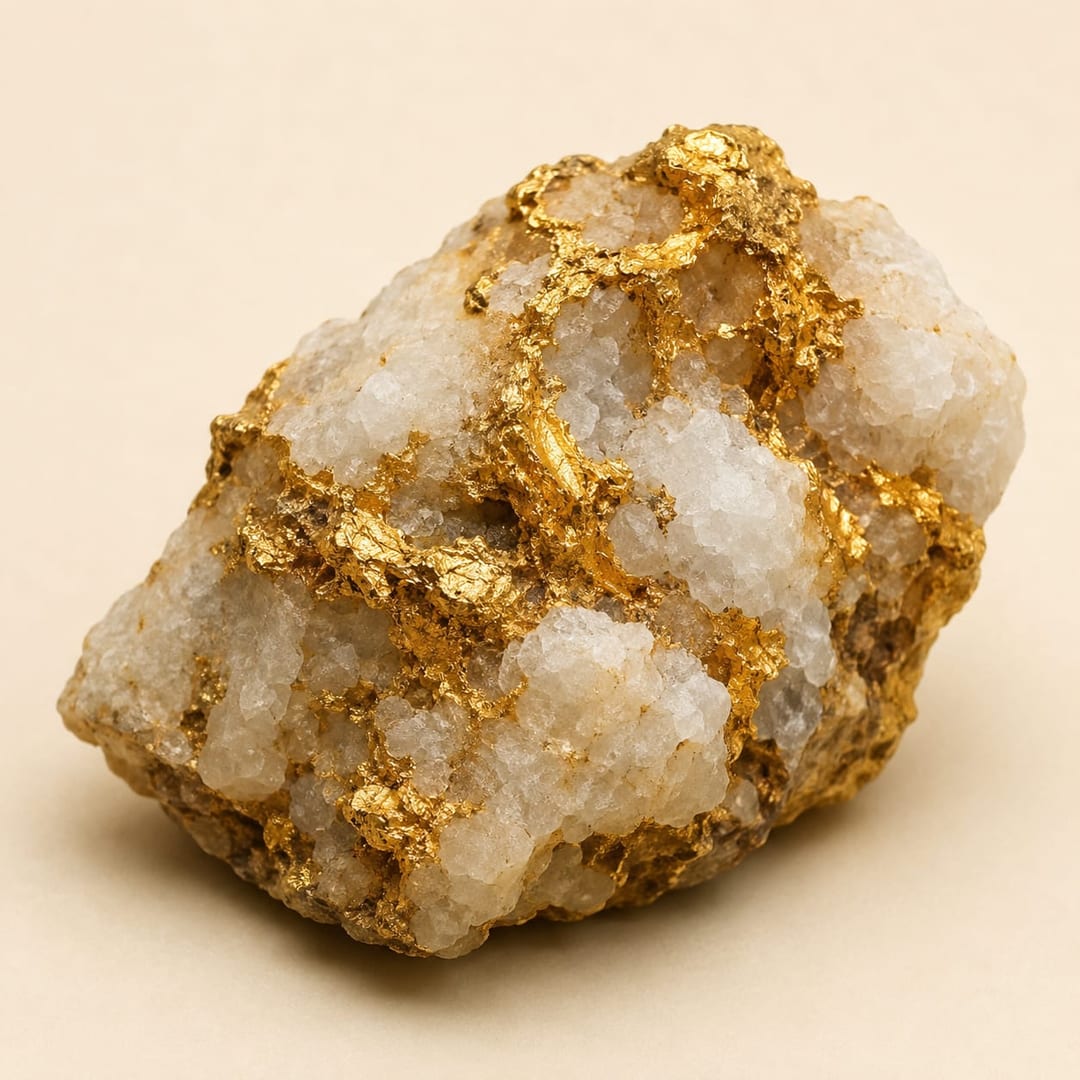
Alternatively, lode deposits occur where the metal is embedded within hard rock, often quartz veins. The contrast between the milky white quartz and the bright metallic yellow is a classic visual signature. However, prospectors must be wary of weathered mica or sulfides that can also inhabit these cracks. Understanding the local geology and mineral history of a region helps rule out false positives. When you upload a photo, noting the terrain—whether it's a sandy bank, a rocky outcrop, or a desert wash—adds a layer of contextual logic that assists in distinguishing a valuable find from common minerals.
The Advantage of Digital Analysis
In the modern age, technology has revolutionized how we examine minerals. Our system leverages computer vision to detect patterns that the human eye might overlook or misinterpret due to wishful thinking. By analyzing millions of pixels, the algorithms can compare the texture, color temperature, and light reflection of your specimen against a massive dataset of verified samples. This provides an objective, instant second opinion without the need for dangerous chemicals or expensive equipment.
This digital approach is particularly valuable as a non-destructive preliminary step. Traditional methods often require scratching the sample or applying corrosive acids, which can damage the aesthetic value of a unique specimen. An optical analysis preserves the integrity of the find. While it does not replace a chemical assay for calculating exact purity, it serves as a powerful, accessible filter to determine if a rock warrants further professional investigation. Whether you are a hobbyist exploring a local creek or an antique hunter checking jewelry, leveraging machine learning brings a level of expertise previously reserved for geologists directly to your screen.
Put what you’ve learned to use
Upload your photos and compare the suggested match with the features you observed.
Frequently Asked Questions
Is this gold identifier free to use?
Yes, the gold identifier is free to use, with a generous daily allowance of identifications and no sign-up required. For unlimited identifications, unlimited AI chat, and saved collections, you can upgrade to IdentifyRock Unlimited.
Do I need to download an app to use this tool?
No, there is no need to download any software or mobile application. This is a web-based tool that works directly in your browser on both desktop and mobile devices.
How does the AI identifying process work?
Our system uses advanced artificial intelligence trained on a vast database of mineralogical images and metallic textures. It analyzes visual patterns, color, luster, and shape in your uploaded photo to suggest the most likely composition.
Can it distinguish between real gold and pyrite (fool's gold)?
While visual analysis can be very accurate, distinguishing gold from pyrite can sometimes be tricky based solely on photos. However, the AI looks for specific crystal structures—pyrite often forms cubes, whereas gold is more irregular—to make a high-probability distinction.
Do I need to register or sign up for an account?
No registration is required. You can use the gold identifier immediately without providing an email address or creating a user profile.
Is there a limit to how many photos I can upload?
The free version includes a generous daily allowance of identifications, enough to analyze most finds. To upload without a daily cap, plus unlimited AI chat and saved collections, you can upgrade to IdentifyRock Unlimited.
Can it identify gold jewelry and hallmarks?
Yes, the AI is trained to recognize both raw natural nuggets and processed jewelry. If you capture a clear photo of a hallmark or stamp, it assists significantly in the verification process.
How accurate is the identification by photo?
The accuracy is quite high for visual characteristics, but visual analysis has limitations. Factors like lighting, camera quality, and surface dirt can affect the result. It is excellent for a preliminary check but should be combined with physical testing for certainty.
What details should I include for better results?
Providing context is helpful. Mentioning if the object is heavy for its size, if it is non-magnetic, or where it was geographically discovered helps the AI refine its results.
Does this replace a professional assay?
No, this tool provides a visual indication and probability match. For determining the exact purity (karat) and financial value of a specimen, a professional chemical assay or acid test is required.
Can I use this on my mobile phone?
Absolutely. The website is fully responsive and optimized for mobile browsers, making it easy to snap a picture in the field and analyze it immediately.
What types of gold can it recognize?
The system recognizes various forms, including placer dust, flakes, large nuggets, wire gold, and manufactured bullion or jewelry items.
Ready to give it a try?
Upload your photos for an AI-assisted best match.