Geode Identifier
The ultimate free online tool to identify geodes, nodules, and crystal formations by photo instantly using advanced AI.
Identification form
Upload geode photos
Clear, well-lit images help the AI identify it more accurately.
Unlock Unlimited Access
- Unlimited Identifications
- Unlimited AI Chat Messages
- Save and Organize Your Collection
How to Use the Geode Identifier
- 1
Snap a Clear Photo
Click "Upload Images" to select a photo of your specimen. For the best identification results, ensure the rock is well-lit by natural light and placed on a neutral background to highlight the texture.
- 2
Capture Details & Angles
Upload multiple angles. If the geode is already open, capture a close-up of the internal crystals. If it is whole, focus on the exterior texture (cauliflower shape) or any visible fractures.
- 3
Provide the Location
Tell us where the rock was found. Geology is location-specific; a geode found in the deserts of Utah will differ significantly from one found in the sedimentary beds of the Midwest.
- 4
Add Observations
Input specific physical traits not visible in photos. Note if the rock feels unusually light (indicating a hollow center), if it rattles, or if the exterior is harder than surrounding rocks.
- 5
Get Instant Results
Click "Identify Geode" to start the analysis. Our AI tool compares your images against a vast database of geological samples to determine if your find is a true geode, a solid nodule, or a thunderegg.
Ready to identify it?
Upload one or more clear photos to get started.
Understanding Geodes: Nature's Treasure Chests
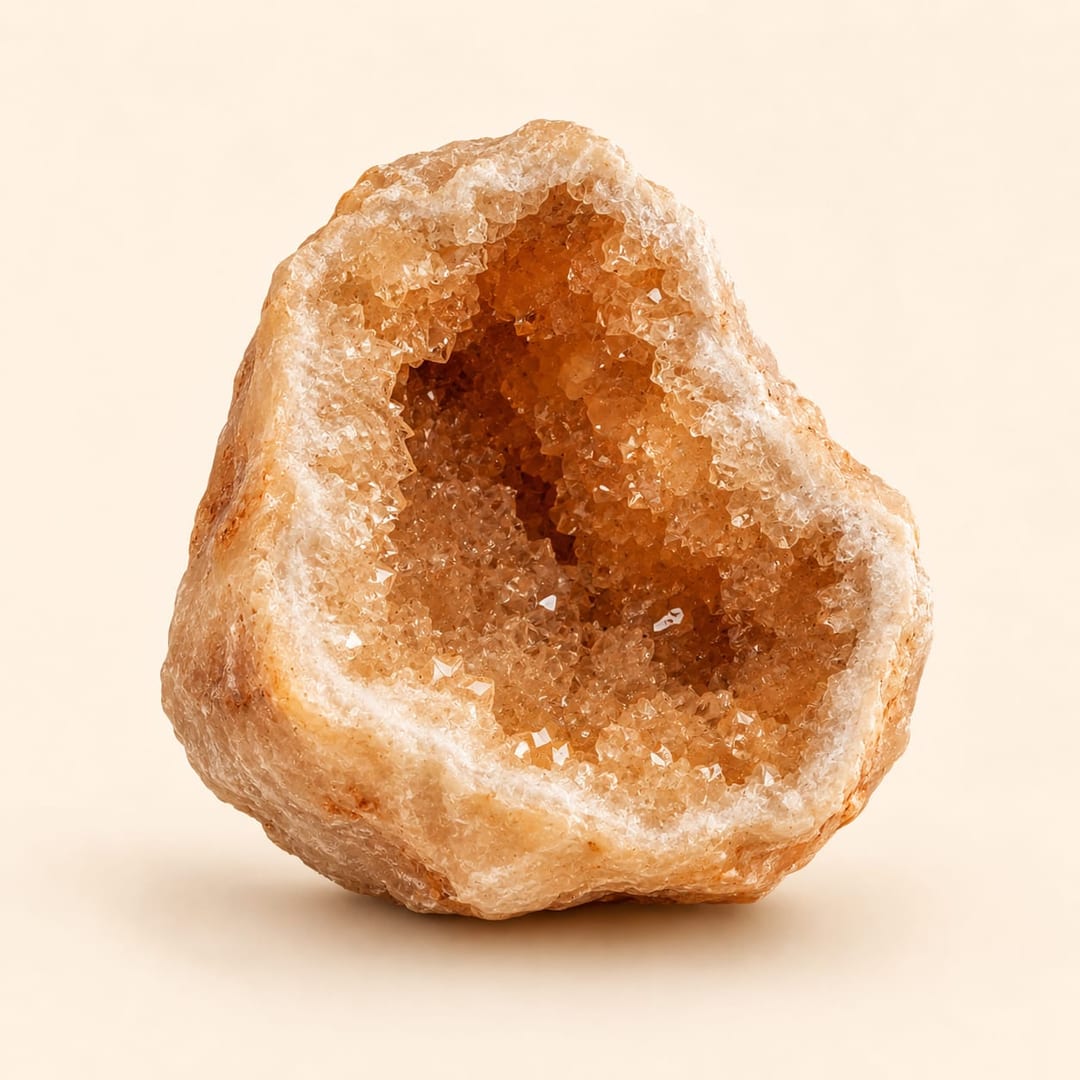
A geode is more than just a rock; it is a geological wonder that looks like an ordinary, bumpy sphere on the outside but holds a sparkling secret within. Geodes are secondary geological structures that occur in certain sedimentary and volcanic rocks. They are essentially hollow, spherical or subspherical rocks lined with crystals or other mineral matter.
The formation of a geode is a process that spans millions of years. It typically begins with a cavity inside a rock. In volcanic rock, these cavities are often gas bubbles that were trapped as lava cooled. In sedimentary rocks, like limestone, cavities might be created by the decay of organic material (like tree roots or shells) or the dissolution of concretions. Over eons, mineral-rich groundwater seeps through the porous outer shell (rind) and deposits minerals on the inner walls. As identifying geodes requires understanding this process, knowing the context of where a rock was found can be a massive clue.
The most common mineral found lining geodes is quartz, but they can also contain amethyst, calcite, celestite, and agate. The geode identifier tool relies on visual signatures of these formations to distinguish them from simple field stones.
Geode vs. Nodule vs. Thunderegg: Knowing the Difference
One of the biggest challenges in rock identification is distinguishing between a geode, a nodule, and a thunderegg. While they can look identical from the outside, their internal structure and formation history differ significantly.
- Geodes: By definition, a geode must be hollow. It has a durable outer wall (rind) that separates it from the surrounding rock matrix, and the interior is lined with inward-projecting crystals.
- Nodules: A nodule is a solid mass. It has the same exterior appearance as a geode but lacks the hollow cavity. If you cut a nodule open, you will find it is solid mineral matter all the way through, often chert or agate.
- Thundereggs: These are specifically formed in silica-rich volcanic flows (rhyolite). Unlike geodes, which form in a pre-existing cavity, thundereggs form from the center out. They usually look like baseball-sized rocks with a rough surface. When cut, they reveal a star-shaped center often filled with agate, jasper, or opal.
Our online identifier helps resolve this confusion. By analyzing the surface texture—thundereggs often have a smoother but ribbed exterior compared to the bumpy 'cauliflower' texture of sedimentary geodes—the tool can suggest the most likely classification.
Where to Find Geodes: Top Locations and Indicators
Geodes are not found just anywhere; they are specific to certain geological environments. Identifying the correct environment is the first step in successful geode hunting. There are two primary environments where geodes originate: volcanic ash beds and sedimentary limestone deposits.
Top Geode Locations in the USA:
- Keokuk, Iowa: Famous for sedimentary geodes found in the Warsaw Formation. These are often lined with quartz, pyrite, and kaolinite.
- Dugway Geode Beds, Utah: Known for geodes formed in rhyolitic beds, often containing quartz and amethyst.
- Deming, New Mexico: A hotspot for thunder eggs and geodes.
- Kentucky & Indiana: Stream beds and outcrops in these states yield high-quality geodes similar to the Keokuk variety.
When using a geode identifier app or online tool, providing the location data is crucial. A round rock found in a Florida swamp is unlikely to be a geode, whereas a similar rock found in a creek bed in Southern Indiana has a high probability. Look for areas where water has eroded the bedrock, exposing the harder, weather-resistant geodes which accumulate in stream beds.
How to Tell if a Rock is a Geode Before Opening It
How do you tell if a rock is a geode before you crack it open? This is the most common question for enthusiasts. While you can never be 100% sure without opening it, there are several key indicators that expert identifiers and our AI tool look for.
- Shape: Geodes are generally spherical or oblong, resembling a cauliflower or a potato. They rarely have sharp corners unless they have been broken.
- Texture: The exterior is usually bumpy and rough. This is known as the 'rind.' In sedimentary geodes, this rind is often harder than the surrounding rock.
- Weight: This is the most reliable field test. Because geodes are hollow, they should feel lighter than a standard rock of the same size. If a rock feels heavy and dense, it is likely a solid nodule or a plain stone.
- Sound: Shake the rock near your ear. Sometimes, a detached crystal or bit of mud inside will rattle. You can also tap it lightly with a hammer; a hollow geode will often produce a duller, deeper sound compared to the high-pitched 'clink' of a solid rock.
Using these physical observations alongside our photo identifier significantly increases your success rate in filtering out ordinary rocks from potential crystal-filled treasures.
Identifying Common Crystal Formations Inside Geodes
Once a geode is opened, the next step is mineral identification. The beauty of a geode lies in its crystal lining. The specific minerals present depend heavily on the chemistry of the groundwater that formed them.
- Quartz: The most common geode lining. It appears as clear, white, or grey hexagonal crystals.
- Amethyst: A purple variety of quartz. Amethyst geodes are highly prized, with massive specimens often coming from Brazil and Uruguay.
- Chalcedony: A microcrystalline form of quartz that appears waxy or smooth. It often forms the base layer or 'shell' of the geode.
- Calcite: These crystals are often white or colorless and have a rhombohedral shape. They are softer than quartz and can be scratched with a knife.
- Celestite: Known for its delicate, sky-blue crystals.
- Pyrite: 'Fool's Gold' can sometimes be found as small, metallic cubes sprinkled over quartz crystals inside a geode.
Our free identifier is trained to recognize crystal habits (shapes) and colors to help you name the minerals inside your specimen. Whether it is the deep purple of amethyst or the metallic luster of pyrite, accurate identification enhances the value and appreciation of your find.
Spotting Fakes: How to Identify Dyed or Artificial Geodes
With the popularity of geodes in home decor, the market is flooded with altered or fake specimens. Being able to identify fake geodes is a necessary skill for any collector. The most common alteration is dyeing.
Signs of a Dyed Geode:
- Unnatural Colors: Bright neon pinks, electric blues, and vivid greens rarely occur in nature. If the color looks too intense to be real, it probably is.
- Dye Accumulation: Look closely at the cracks and the outer rind. If the color is concentrated in fractures or if the exterior rock skin is stained the same color as the crystals, it has been dyed.
Man-Made Geodes: Some 'geodes' are entirely artificial. For example, 'Galena Geodes' from Morocco are often created by gluing crushed lead ore onto a pottery or rock base. These often look like a perfect bowl shape with small, uniform metallic sparkles. Our online identification tool helps flag these anomalies. If the AI detects specific color palettes associated with synthetic dyes or structural irregularities typical of fakes, it alerts you to the possibility that the specimen is not 100% natural.
Safe Methods for Cracking and Opening Geodes
Once you have successfully identified a likely geode, the final step is opening it. There are several methods to crack a geode, ranging from primitive to professional.
1. The Sock Method (safest for beginners): Place the geode inside an old sock to contain the shards. Hit it firmly with a hammer or sledgehammer. The sock prevents rock chips from flying into your eyes.
2. Hammer and Chisel: This allows for a more controlled break. Locate a natural fracture line or the center of the geode. Place the chisel point there and tap gently, increasing force until it cracks. This method is better for splitting the geode into two even halves.
3. Pipe Cutter: For smaller geodes, a soil pipe cutter (a chain with cutting wheels) can be wrapped around the geode. As you tighten the chain, it applies even pressure around the circumference, popping the geode open cleanly.
4. Lapidary Saw: The most professional method involves cutting the geode with a diamond-tipped saw. This results in a perfectly flat, polished face that displays the cross-section of the rind and crystals beautifully.
Always wear safety goggles when breaking rocks. Even small geodes can send razor-sharp quartz shards flying at high speeds.
Put what you’ve learned to use
Upload your photos and compare the suggested match with the features you observed.
Frequently Asked Questions
How does this geode identifier work?
Our geode identifier utilizes advanced Artificial Intelligence (AI) trained on thousands of geological images. By analyzing the texture, shape, exterior rind, and crystal structure visible in your photos, the AI cross-references patterns to identify if your specimen is a geode, what type of minerals it may contain, and distinguishes it from similar geological formations like concretions.
Is this geode identification tool free?
Yes, the geode identifier is free to use, with a generous daily allowance of identifications and no sign-up or app download required. We believe in making geological education accessible to everyone, from amateur rockhounds to students. For unlimited identifications, unlimited AI chat, and saved collections, you can upgrade to IdentifyRock Unlimited.
Do I need to download an app to identify my geode?
No, there is no need to download or install any applications. Our geode identifier is a fully web-based online web app. It works directly in your browser on any device, whether you are using a smartphone, tablet, or desktop computer.
Do I need to sign up or create an account?
No, identifying your rocks requires no sign-up or registration. You can use the tool instantly and anonymously. We do not collect your personal data or require an email address to provide identification results.
Can this tool identify an unopened geode?
Yes, identifying unopened geodes is a primary feature. By analyzing photos of the exterior rind—looking for lumpy 'cauliflower' textures, specific fracturing, and spherical shapes—our AI can estimate the probability of the rock being a hollow geode versus a solid nodule, though opening it is the only way to be 100% certain of the contents.
What is the difference between a geode and a nodule?
The main difference lies in the interior. A geode is hollow with a lining of crystals or mineral matter inside a hard outer shell. A nodule is a solid mass of mineral matter with no hollow cavity. Our identifier helps distinguish between these two often confused formations based on visual clues and density indicators you provide.
Can the AI tell if a geode is dyed or fake?
Our AI is trained to recognize unnatural color patterns often seen in dyed agate slices or geodes (such as neon pinks, electric blues, or unnatural purples that seep into the outer rind). It can flag specimens that appear to be chemically altered or man-made 'galena' geodes.
What types of crystals can be found inside geodes?
Geodes most commonly contain quartz variants, including clear quartz, amethyst (purple), and citrine (yellow). Others may contain chalcedony, agate banding, calcite, celestite, or even metallic minerals like pyrite. The identifier attempts to classify the visible internal crystals based on habit and color.
How accurate is the geode identification?
The tool is highly accurate for common geode types and distinct specimens. However, geology is complex, and some rocks can be deceptive. Factors like poor lighting or blurriness in the photo can affect accuracy. We recommend providing clear photos and detailed notes for the best results.
Does location matter for identification?
Yes, location is a critical factor. Certain regions are famous for specific types of geodes (e.g., Keokuk geodes in Iowa, coconut geodes in Mexico, or thundereggs in Oregon). Providing the location helps the AI narrow down the likely mineral composition and origin of the specimen.
What is a thunder egg and how is it different from a geode?
A thunder egg (or thunderegg) is a specific type of nodule-like structure formed within rhyolitic volcanic ash layers, whereas traditional geodes often form in sedimentary limestone. Thunder eggs may be solid or contain a small cavity and are usually filled with agate, jasper, or opal. The tool looks for specific flow bands and star-shaped internal patterns to identify them.
Is there a limit to how many photos I can upload?
The free version includes a generous daily allowance of identifications, enough to work through most rocks and collections. To identify an entire collection one by one without a daily cap, plus unlimited AI chat and saved collections, you can upgrade to IdentifyRock Unlimited.
Ready to give it a try?
Upload your photos for an AI-assisted best match.