Coral Identifier
Accurate AI-powered identification for marine species and reef aquarium enthusiasts
Identification form
Upload coral photos
Clear, well-lit images help the AI identify it more accurately.
Unlock Unlimited Access
- Unlimited Identifications
- Unlimited AI Chat Messages
- Save and Organize Your Collection
How to Use the Coral Identifier
- 1
Snap a Clear Underwater Photo
Click "Upload Images" to select a photo. For the most accurate coral identification, try to get a clear, focused shot of the colony. If you are underwater, ensure you are close enough to capture texture details, but be careful not to touch or damage the reef.
- 2
Capture Details & Angles
Upload extra photos to help the AI. Close-ups of the individual polyps, the skeletal structure, or the colony edge provide vital clues. Tip: Using a red filter or white balancing your camera helps restore true colors lost at depth.
- 3
Provide the Location
Tell us where the coral was found. Geography is a key data point—a species found in the Caribbean is often distinct from one found in the Indo-Pacific region.
- 4
Add Observations
Input specific traits to narrow down the results. Note the growth form (branching, plating, or massive?), whether the surface felt slimy or rough (if you accidentally touched it), and the time of day (some polyps only open at night).
- 5
Get Instant Results
Click "Identify Coral" to start the analysis. Our system will compare your photos against thousands of marine biology samples to provide the closest matches for your specimen.
Ready to identify it?
Upload one or more clear photos to get started.
Understanding Coral Morphology and Growth Forms
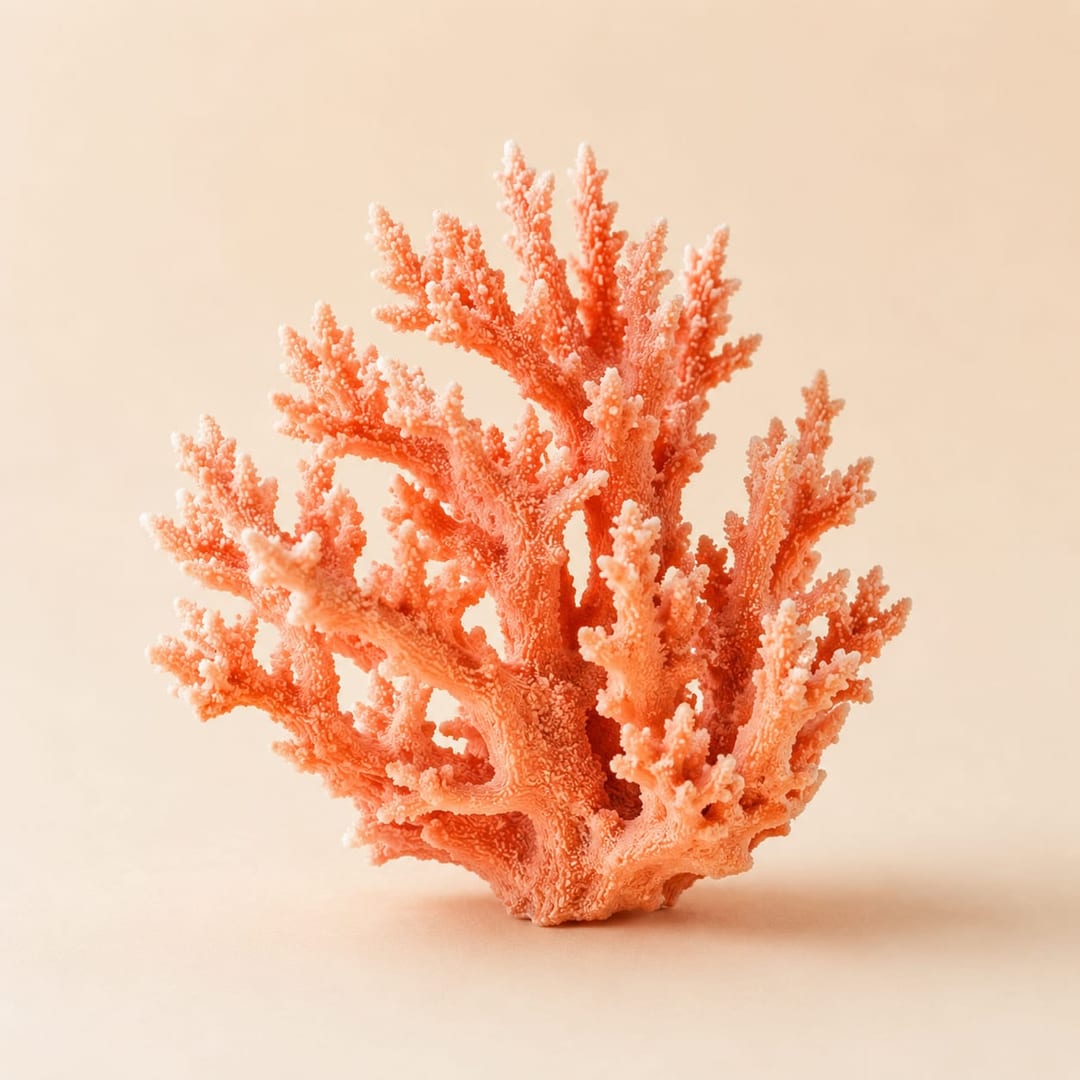
Recognizing the diverse forms of marine invertebrates is the first step in successful classification. When you observe a specimen on the reef, you are looking at a colony of tiny animals called polyps. The growth form is often the most immediate visual cue. Some colonies grow in branching structures that resemble trees or antlers, allowing them to capture sunlight and plankton efficiently in shallower waters. Others form massive boulders or domes, which are slow-growing but incredibly resilient against storm surges.
Beyond the general shape, the surface texture provides critical information. Stony species (Scleractinia) secrete a hard calcium carbonate skeleton, making them the primary reef-builders. In contrast, soft varieties (Alcyonacea) lack this rigid outer skeleton and often appear fleshy or leathery, swaying with the ocean currents. Paying attention to whether the polyps are retracted or extended during the day can also offer hints, as different families have distinct feeding schedules. Noting these morphological traits helps distinguishing between look-alike groups.
Coral Identification for Reef Aquarium Keepers
For reef aquarium hobbyists, correctly naming the inhabitants of a tank is crucial for maintaining a healthy ecosystem. Often, new live rock introduces uninvited guests. While some hitchhikers are beneficial filter feeders, others can be invasive pests that threaten your prized livestock. Using visual recognition software can help you quickly determine if a new arrival is a harmless zoanthid or a potentially destructive Aiptasia anemone (often confused with certain polyps).
Accurate knowledge of your tank's biodiversity allows for better care decisions. Different species have vastly different requirements regarding lighting intensity and water flow. A specimen misidentified as a low-light dweller might bleach and die if placed under high-intensity LEDs, while a flow-loving species might suffocate in a stagnant corner. Furthermore, knowing the specific genus helps in selecting the right food, as some rely heavily on photosynthesis via symbiotic zooxanthellae, while others are non-photosynthetic and require target feeding of plankton.
Optimizing Underwater Photos for Accurate Analysis
Capturing images for analysis presents unique challenges due to the physics of light underwater. As you descend, water absorbs colors, starting with red, orange, and yellow. This results in images that appear overwhelmingly blue or green, masking the true coloration of the subject. To assist the AI algorithms, try to restore color fidelity. Using a red filter on your action camera or shooting in RAW format to adjust white balance in post-processing can make a significant difference in the result quality.
Focus and proximity are equally important. General wide-angle reef shots are often insufficient for precise classification. Attempt to take macro photographs that reveal the structure of individual corallites—the cup-like skeletal distinct features where polyps sit. If you are snorkeling or diving, maintain neutral buoyancy to avoid damaging the delicate environment while you compose your shot. A steady hand ensures the sharp details necessary for the software to detect subtle textural patterns distinguishing closely related families.
Why Accurate Identification Matters for Conservation
The ability to name and recognize reef species plays a vital role in citizen science and conservation efforts. Global reef systems are under immense stress from climate change, ocean acidification, and pollution. When divers and snorkelers can accurately report which species are thriving and which are suffering from diseases like Stony Coral Tissue Loss Disease (SCTLD) or bleaching, they contribute to a larger dataset that helps researchers track ecosystem health.
Understanding what you see transforms a recreational dive into an educational experience. It fosters a deeper connection to the marine environment and promotes responsible behavior. For instance, knowing that a specific organism is a fragile fire coral (hydrocoral) rather than a plant encourages divers to keep a safe distance, preventing injury to themselves and damage to the wildlife. Promoting widespread literacy in marine taxonomy empowers communities to advocate for stronger protection of these biodiverse underwater cities.
Put what you’ve learned to use
Upload your photos and compare the suggested match with the features you observed.
Frequently Asked Questions
Is this coral identifier tool free to use?
Yes, the coral identifier is free to use, with a generous daily allowance of identifications and no sign-up required, making it accessible for students, divers, and hobbyists alike. For unlimited identifications, unlimited AI chat, and saved collections, you can upgrade to IdentifyRock Unlimited.
Do I need to download an app to use this?
No, you do not need to download anything. This is a web-based application that runs directly in your browser, saving storage space on your device.
How does the AI identify coral from a photo?
The AI uses advanced computer vision trained on thousands of labeled marine images. It analyzes textures, growth patterns, polyp shapes, and colorations to match your photo with known species in its database.
Can I use this tool for aquarium corals?
Absolutely. Whether you are identifying a hitchhiker in your reef tank or confirming a species at a fish store, the tool works for both wild and captive specimens.
Is there a limit to how many corals I can identify?
The free version includes a generous daily allowance of identifications, enough to catalogue most finds. To analyze without a daily cap, plus unlimited AI chat and saved collections, you can upgrade to IdentifyRock Unlimited.
Do I need to create an account or sign up?
No sign-up or registration is required. You can start identifying immediately without providing an email address or personal information.
Does it work on mobile devices?
Yes, our website is fully responsive and optimized for mobile devices, allowing you to identify specimens right from the boat or the beach.
Can it identify dead coral skeletons?
Identification is most accurate with living tissue, but the AI can often recognize distinct skeletal structures (corallites) if the photo is clear and close-up.
What if my underwater photo is very blue?
Blue-washed photos are common in underwater photography. While our AI is trained to handle some color distortion, correcting the white balance of your image before uploading can significantly improve accuracy.
How accurate is the identification?
The tool provides high-probability matches based on visual data. However, for scientific certainty—especially with similar-looking species—microscopic analysis or genetic testing might be required.
Can I help improve the database?
While we don't currently have a direct user-submission pipeline for training, using the tool helps us understand common queries and refine the system over time.
Is this suitable for scientific research?
It acts as a powerful preliminary field guide or quick reference, but professional taxonomists should verify results for formal academic research.
Ready to give it a try?
Upload your photos for an AI-assisted best match.